## Beyond the Veil of Dust: Webb Unveils NGC 5134’s Stellar Secrets
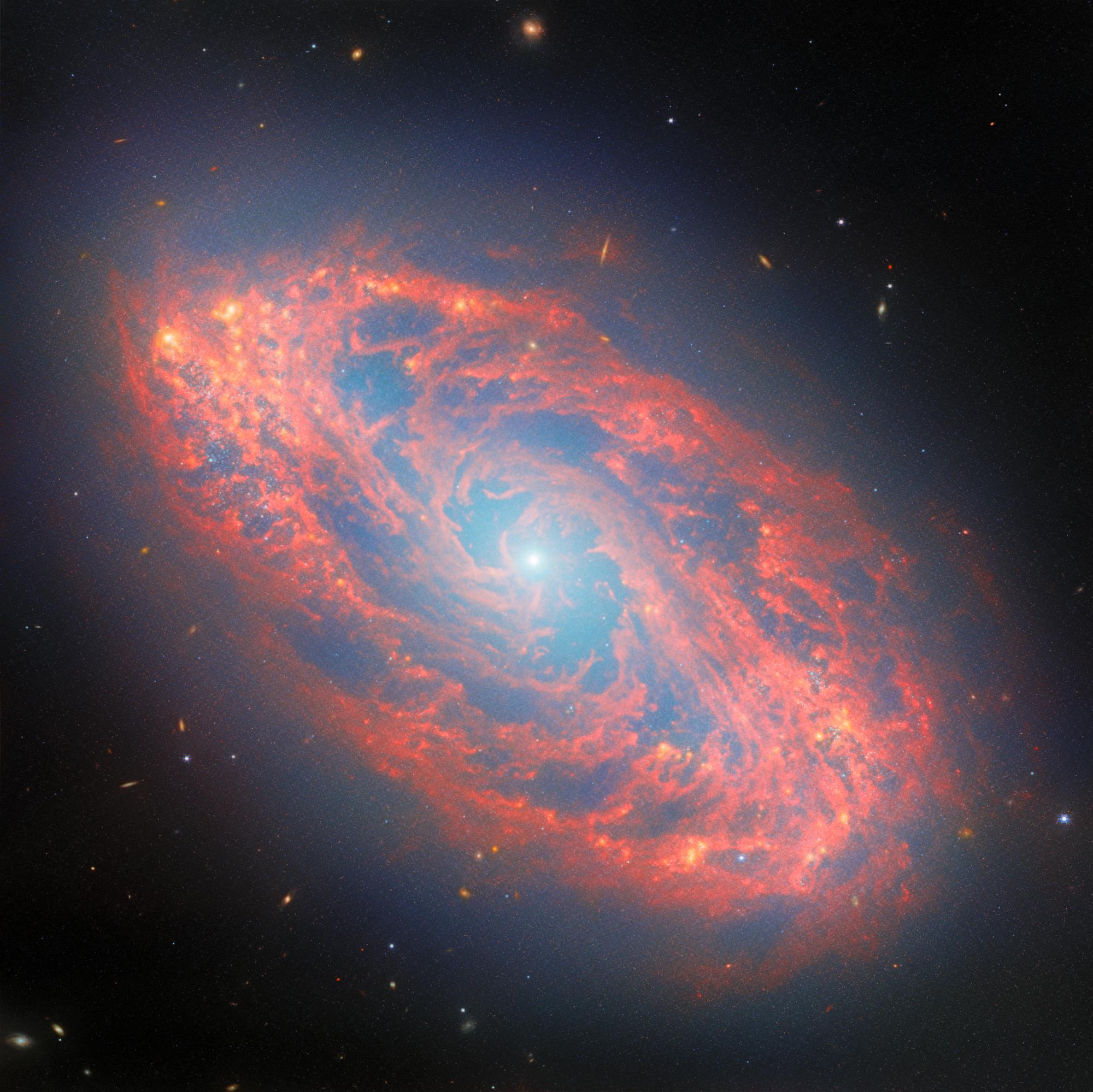
NGC 5134, a spiral galaxy shimmering 65 million light-years away in the constellation Virgo, has just become a lot more revealing, thanks to the unparalleled vision of the James Webb Space Telescope. For the first time, we’re seeing this celestial neighbor not just as a collection of stars, but as a dynamic, breathing entity, its secrets unlocked by the combined power of Webb’s Near-Infrared Camera (NIRCam) and Mid-Infrared Instrument (MIRI). This isn’t just a pretty picture; it’s a profound glimpse into the ongoing drama of star birth and death, written in the language of light and dust.
***
## From the Lab to the Living Room: A New Perspective on the Cosmos
Watching the latest images from the James Webb Space Telescope come in always feels like a homecoming, albeit one I experience from a different kind of launchpad these days. It’s a strange duality, shifting from the immense pressure and precision of launching rockets to the quiet hum of the dishwasher and the joyful chaos of four little explorers. But that fundamental drive to understand, to peel back the layers of the universe, it never truly leaves you.
When I see images like the one of NGC 5134, I don’t just see a beautiful galaxy. My mind immediately starts dissecting it, not with blueprints and spreadsheets anymore, but with a seasoned eye for the underlying processes. Those swathes of darkness that might seem like empty space to some? I know that’s often where the magic happens – the dense, swirling clouds of gas and dust that are the cradles of new stars. My time spent wrestling with the intricate properties of materials, ensuring they could withstand the brutal conditions of space – the extreme temperatures, the radiation, the vacuum – has ingrained a deep appreciation for the resilience and dynamism of matter, even on a galactic scale.
Those brighter patches, the vibrant knots of light? They speak of stellar nurseries, of young, hot stars igniting and carving out their existence. I remember countless hours poring over material data, trying to predict how alloys would behave, how coatings would degrade, all in the name of keeping astronauts safe and missions on track. That same meticulous attention to detail, that understanding of how elements interact and transform under pressure, is what I now see reflected in the grand cosmic dance of NGC 5134.
And then there are the older stars, their light stretching across unimaginable distances. They tell stories of evolution, of elements forged in their cores and scattered into the void, seeding future generations of stars and planets. It’s a narrative I know intimately, having been part of a program that pushed the boundaries of what humanity could build and achieve in space. The safety protocols, the rigorous testing, the constant vigilance – they were all built on the understanding that every component, every decision, had to account for the entire lifecycle of a mission, from launch to return.
Now, my days are filled with a different kind of lifecycle management. From meticulously planning toddler meals to monitoring the delicate balance of nap schedules, it’s about nurturing growth and ensuring a safe environment. Yet, there’s a profound connection. Just as I once analyzed the integrity of a heat shield to protect a shuttle, I now instinctively assess the “stability” of a sibling squabble to prevent escalation. The principles of observation, of understanding cause and effect, of anticipating potential issues – they are universal.
Seeing Webb unveil the intricate details of NGC 5134, the layers of stellar activity, the hidden pockets of creation and destruction, it’s a powerful reminder that the universe, like a family, is constantly in flux. It’s a grand, complex system, and while my direct involvement in building those incredible machines has paused, my appreciation for the science, for the engineering, and for the sheer wonder of it all, has only deepened. It’s a perspective gained not just from the clean rooms and control centers of the past, but from the beautiful, challenging, and infinitely rewarding world I inhabit today.
Leave a Reply