## A Cosmic Mind-Bender: Webb Uncovers the Cranium Nebula’s Secrets
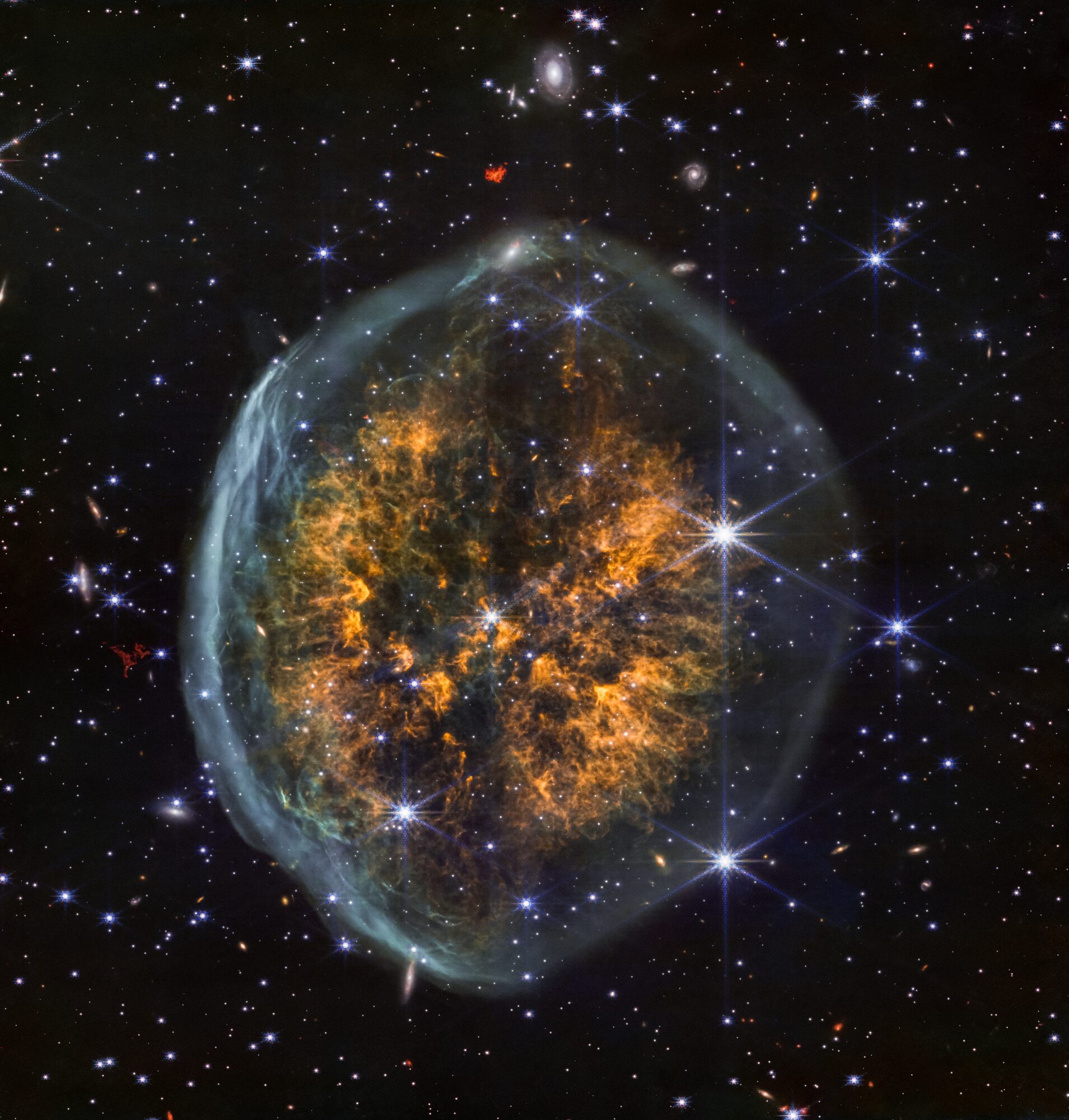
The universe, in its infinite artistry, often throws us curveballs that challenge our perception. Today, the James Webb Space Telescope (JWST) has delivered one such mind-bending marvel: an image of the Cranium Nebula, a celestial spectacle that, at first glance, uncannily resembles a colossal, cosmic brain.
What appears to be a detailed rendering of left and right hemispheres, complete with intriguing formations, is in reality the magnificent aftermath of a star’s final act. A dying star, shedding its outer layers, has sculpted a vast shell of gas. Within this ethereal envelope, a complex cloud of various gases dances, illuminated and revealed in unprecedented detail by Webb’s advanced infrared capabilities. This isn’t just a pretty picture; it’s a profound glimpse into the life and death cycles of stars, and the intricate chemical compositions that fill the cosmos.
***
## Echoes from the Launchpad: Observing Webb’s Cosmic Canvas
There’s a peculiar resonance I feel when I see images like this. It’s a familiar hum, a blend of awe and deep-seated understanding that comes from years spent immersed in the unforgiving, yet exhilarating, world of space exploration.
Looking at the Cranium Nebula, my mind doesn’t just see a distant cloud of gas and dust. It sees the culmination of meticulous design, the triumph of engineering over the vacuum of space. The way the light interacts with the different gas densities, the sharp clarity of the structures – it all speaks to the incredible sophistication of the instrumentation.
For years, my focus was on the tangible: the alloys that could withstand extreme temperatures, the composites that offered strength without prohibitive weight, the intricate processing techniques that ensured every component was flawless. Safety wasn’t just a department; it was the bedrock of every decision. We understood, with a visceral certainty, that even the smallest imperfection could have catastrophic consequences millions of miles from Earth.
Now, my days are filled with a different kind of intricacy – the complex needs of four growing humans. My “mission control” is a bustling household, and my “payloads” are snack requests and bedtime stories. Yet, the principles remain surprisingly similar. There’s a constant need for understanding, for anticipating challenges, and for ensuring that everything is just right before launching into the next phase of the day.
When I see Webb revealing the universe in such exquisite detail, I recognize the echoes of that same relentless pursuit of perfection. The materials science that went into those mirrors, the thermal management systems keeping the instruments precisely calibrated, the sheer audacity of sending such a delicate instrument so far – it all connects. It’s a reminder that the same dedication to understanding and mastering the physical world, which I once applied to getting rockets off the ground, is now being applied to unraveling the universe’s deepest mysteries.
And while I may no longer be in the control room, surrounded by readouts and critical data, I still monitor the industry with a keen eye. The innovations are breathtaking, the discoveries are profound, and the spirit of exploration is as vibrant as ever. It’s a privilege to have played a small part in that journey, and an even greater joy to now witness its unfolding from a different, yet equally important, vantage point. The Cranium Nebula is a testament to what we can achieve when we push the boundaries of what’s possible, a message that resonates just as strongly in the quiet hum of my home as it once did amidst the roar of a launchpad.
Leave a Reply