Here’s a blog post crafted from the perspective of an ex-Space Shuttle engineer, reflecting on the significance of space-grown crystals:
## Tiny Tears, Towering Potential: What Space-Grown Crystals Teach Us About Life (and Home)
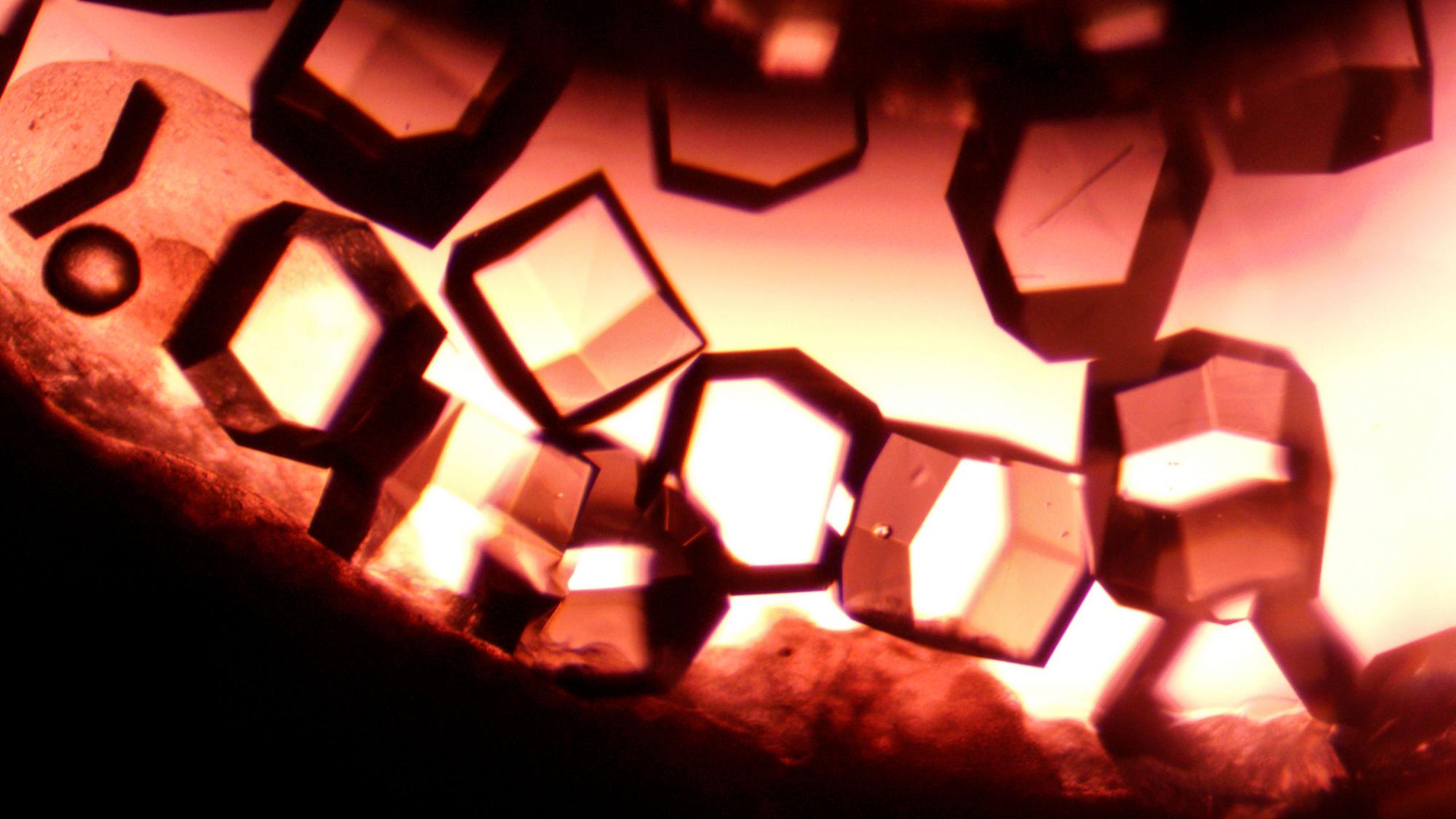
The image flickers across my screen – delicate, intricate structures, like miniature glass sculptures, captured after a long journey home. These aren’t just pretty shapes; they are lysozyme crystals, brought back from the International Space Station (ISS). And as I look at them, a wave of memories washes over me, a familiar ache of both longing and satisfaction.
Lysozyme. I know that protein. It’s in our tears, our saliva, even my milk. A fundamental building block of our defenses, and here it is, on display after a stint in the ultimate laboratory: orbit. The reason these crystals are so fascinating, so noteworthy, is the very environment they grew in – microgravity.
Back in the thick of it, when I was immersed in the intricate dance of materials and the unforgiving demands of spaceflight, the pursuit of understanding how things behave beyond Earth’s pull was relentless. We’d spend hours poring over data, analyzing how materials reacted to extreme temperatures, vacuums, and the absence of that constant downward tug we take for granted. The goal was always to build things that wouldn’t just survive, but *thrive* in space, and to bring back knowledge that could improve life *here*.
Growing crystals in space isn’t just a scientific curiosity; it’s a testament to our drive to understand the fundamental forces that shape matter. On Earth, gravity plays a subtle but significant role in how molecules arrange themselves. It can cause imperfections, leading to smaller, less uniform crystals. But in the serene, weightless environment of the ISS, those molecules have the freedom to align themselves in a much more orderly fashion. The result? Bigger, more perfect crystals.
This pursuit of perfection, of understanding how to coax the most ideal structure from a compound, has direct implications for medicine. Imagine developing more effective drugs, creating purer proteins for therapies, or even engineering new materials with extraordinary properties. These space-grown lysozyme crystals are like tiny, tangible proofs of concept, demonstrating that by removing terrestrial constraints, we can unlock new possibilities.
It’s a humbling reminder that even the most complex engineering marvels, like the Shuttle I once helped bring to life, are built upon a deep understanding of basic science. And that understanding, honed through countless hours of design, testing, and a constant, unwavering focus on safety (a topic I could write a novel about!), never truly leaves you. Even now, while managing the exhilarating chaos of four children – a feat that often feels like its own form of unpredictable orbital mechanics – my mind still drifts back to the elegance of controlled experiments and the pursuit of optimal outcomes.
Seeing these crystals return, knowing the meticulous effort that went into their cultivation and retrieval, fills me with a quiet pride. It’s a glimpse into the ongoing legacy of space exploration, a reminder that the knowledge gained in orbit continues to ripple outwards, touching our lives in ways we may not always immediately recognize. From the hum of the Shuttle’s engines to the gentle formation of a space-grown crystal, it’s all part of the same grand, scientific adventure. And even from my current vantage point, far from the launchpad but closer than ever to the fundamental building blocks of life, that adventure continues to inspire.
Leave a Reply