Here’s a summary of the solar flare event and a blog post from the perspective of an ex-Space Shuttle engineer:
## Summary of Solar Flare Event
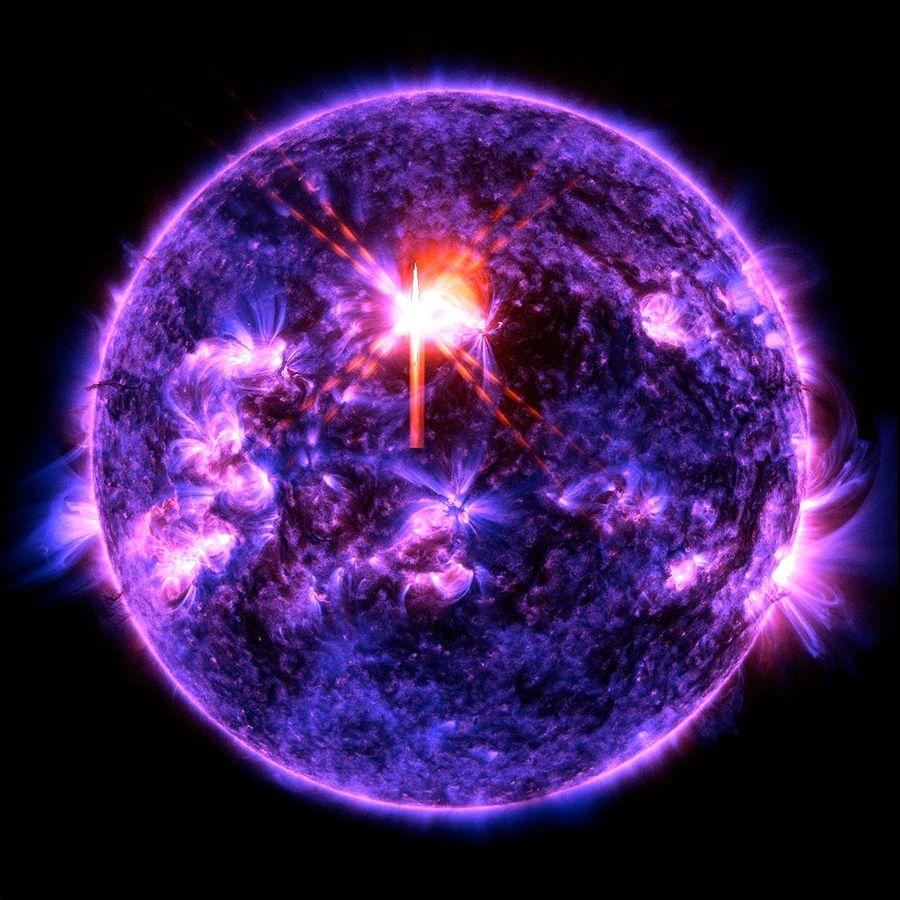
A colossal burst of energy erupted from the Sun on February 4, 2026, as captured in stunning detail by NASA’s Solar Dynamics Observatory (SDO). This powerful solar flare, visible as a blinding flash in the upper middle portion of the image, represents a significant release of plasma and radiation. The image, rendered in vibrant blues and reds, isolates and highlights the incredibly hot materials ejected during this event, offering a glimpse into the dynamic and often violent nature of our star.
—
## Blog Post: Still Looking Up, Even From the Ground
You know, even with the minivan packed to the brim and a constant hum of kid-related activities, my eyes still drift upward. It’s a habit that’s hard to break, a residual wiring from years spent meticulously studying the dance of celestial bodies and the materials that brave their extremes. While my current missions involve managing homework assignments and orchestrating snack schedules, the universe hasn’t quite let go of me.
Just recently, I saw a breathtaking image from NASA’s Solar Dynamics Observatory – a solar flare, a bright, fiery exclamation point painted across the Sun’s surface. It was a flash so intense, captured in a spectrum that makes the invisible palpable, showcasing the searing heat in blues and reds. It’s easy to see these images as just pretty pictures, but for me, they’re a powerful reminder of the raw power we’re constantly interacting with, even from our comfortable little planet.
Seeing that flare, I can’t help but think about the sheer forces at play. It’s a level of energy release that dwarfs anything we engineer down here. My mind immediately goes to the ripple effects, the potential disruptions. Those flares, while visually stunning, are also potent bursts of radiation and charged particles that can reach Earth. It’s a delicate balance, this constant flow from our star.
It’s fascinating to witness how our understanding of these phenomena has evolved. The ability of instruments like the SDO to capture such detailed, spectral information is a testament to decades of innovation. I remember the meticulous processes of material selection and testing, the constant concern for how every component would behave under incredible stresses – be it the vacuum of space, extreme temperature swings, or the bombardment of particles. When you’re designing for space, you’re not just building a machine; you’re creating a shield, a carefully engineered bubble that can withstand the untamed forces of the cosmos.
While my days of troubleshooting launch hardware are behind me, the fundamental principles of understanding and mitigating risk, of respecting the immense power of space, remain deeply ingrained. These solar events serve as a constant, beautiful, and humbling reminder of why that vigilance is so important. It’s a reminder that even though I’m grounded, my fascination with the sky, and the incredible engineering that helps us understand and navigate it, is as strong as ever. And that, in its own way, is a pretty powerful feeling.
Leave a Reply