## The Ocean’s Embrace: A Familiar Echo from an Unfamiliar Sea
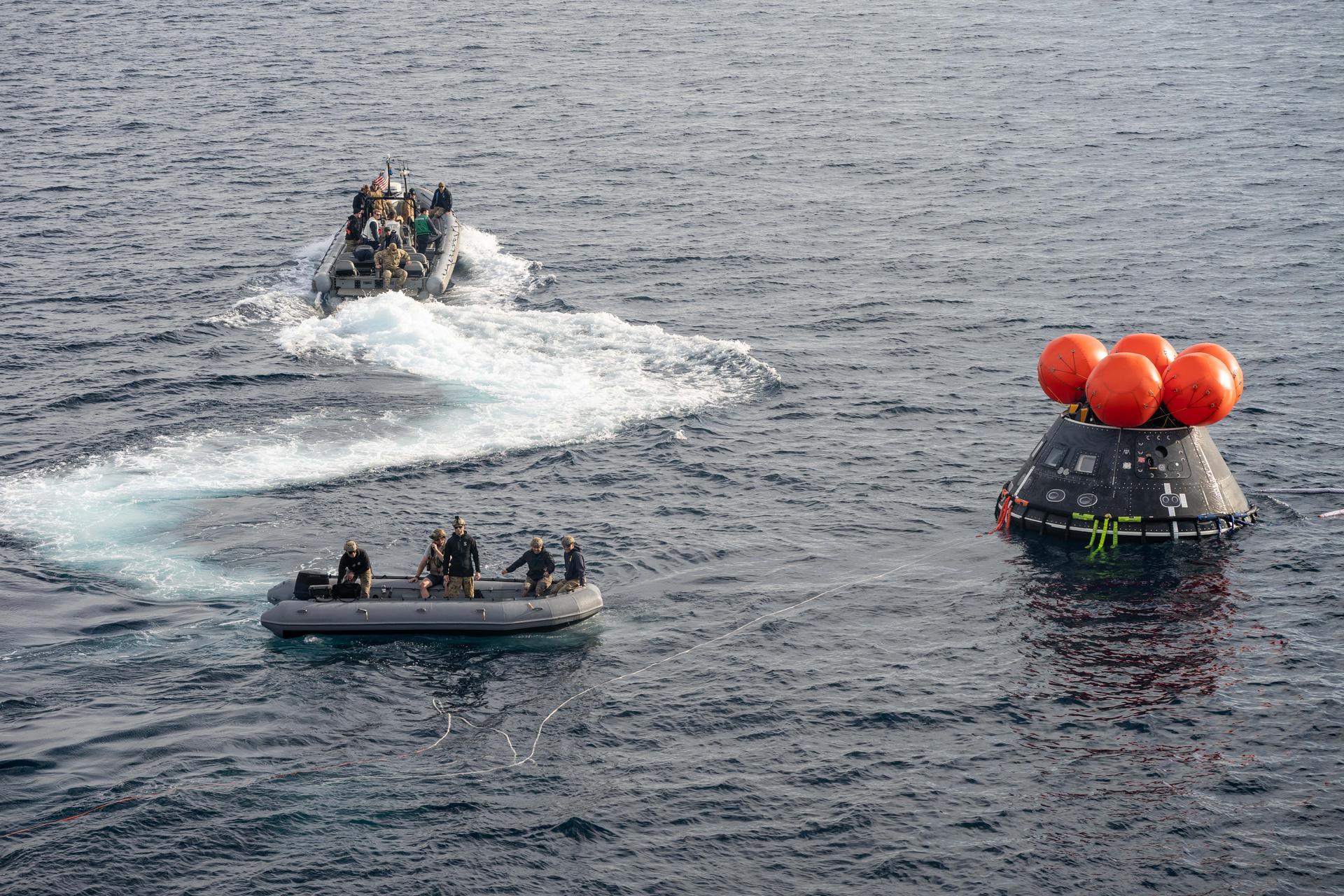
Imagine this: the vast expanse of the Pacific, a mirror to the inky blackness of space, but instead of distant stars, the focus is on a single point of impact. It’s a moment etched in memory, a controlled descent where the elements conspire to welcome humanity back from the void. This isn’t a scene from a science fiction film, but the critical culmination of NASA’s Artemis II mission, as the agency and its partners meticulously rehearse the recovery of the Orion spacecraft and its precious crew.
This “just-in-time” training, as it’s called, involves the Artemis Landing and Recovery team, alongside personnel from the Department of War. Their mission: to flawlessly execute the retrieval of astronauts and their vessel after splashdown. Using a full-scale mockup of the Orion, the Crew Module Test Article, they’re simulating every conceivable scenario to ensure a safe and efficient return. It’s a testament to the meticulous planning that underpins every space endeavor, transforming the unpredictable ocean into a predictable landing zone.
***
## From the Shuttle’s Wing to the Ocean’s Shore: A Mother’s Perspective on Artemis Recovery
The image of a spacecraft returning to Earth, its fiery descent softening into the gentle embrace of the ocean, is one that resonates deeply, even from a distance. While the roar of engines and the hum of complex machinery are now distant echoes, replaced by the cheerful chaos of four young lives, the principles of safety, precision, and material resilience remain at the forefront of my mind.
Watching these Artemis II recovery simulations unfold, I’m struck by the continuity of human ingenuity. The challenges of bringing a spacecraft back from the edge of space haven’t fundamentally changed since my time working on the Space Shuttle program. It’s about understanding how materials will behave under extreme conditions – the heat of re-entry, the shock of splashdown, the corrosive nature of saltwater. My experience involved deep dives into the very fabric of spacecraft, ensuring every bolt, every seal, every piece of insulation could withstand the unforgiving environment of space and the violent transition back to Earth. That meticulous attention to detail, to the science of how things break and how to prevent it, is exactly what I see being exercised today.
There’s a certain poetry in the fact that the recovery efforts involve the Department of War. It speaks to the overarching priority of human safety, a principle that transcends any single mission or agency. During my tenure, safety wasn’t just a protocol; it was an ingrained philosophy, a constant question: “What if?” What if this weld fails? What if this material degrades? What if the unexpected happens during a critical phase like re-entry or landing? These simulations are the ultimate “what if” scenarios, played out in the real world with a practice capsule, ensuring that the real event, when it happens, is as smooth and predictable as possible.
The ocean, in this context, isn’t just a body of water; it’s a carefully chosen landing zone, a vast buffer designed to absorb the immense forces of re-entry. My work often focused on the interface between the spacecraft and its environment, understanding the dynamics of impact and the stresses placed on the structure. The recovery teams are essentially managing that final, critical interaction, a ballet of specialized vessels and trained personnel working in concert to secure the capsule and its inhabitants. It’s a complex choreography, demanding not just technical expertise but also an intimate understanding of the sea itself – its currents, its moods, its unforgiving nature.
Now, as a mother overseeing a different kind of complex operation (one involving snack schedules and bedtime stories), I appreciate the dedication to mitigating risk even more. The stakes are always incredibly high when humans venture beyond our atmosphere. The success of Artemis II, and indeed any future human spaceflight, hinges not only on the incredible journey outward but equally on the safe and secure return. Seeing these simulations, I recognize the familiar fingerprints of rigorous engineering and an unwavering commitment to bringing our explorers home safely, a mission as vital as the journey to the stars itself.
Leave a Reply