## Cosmic Cauldrons and the Whispers of Youth: A Glimpse into Stellar Infancy
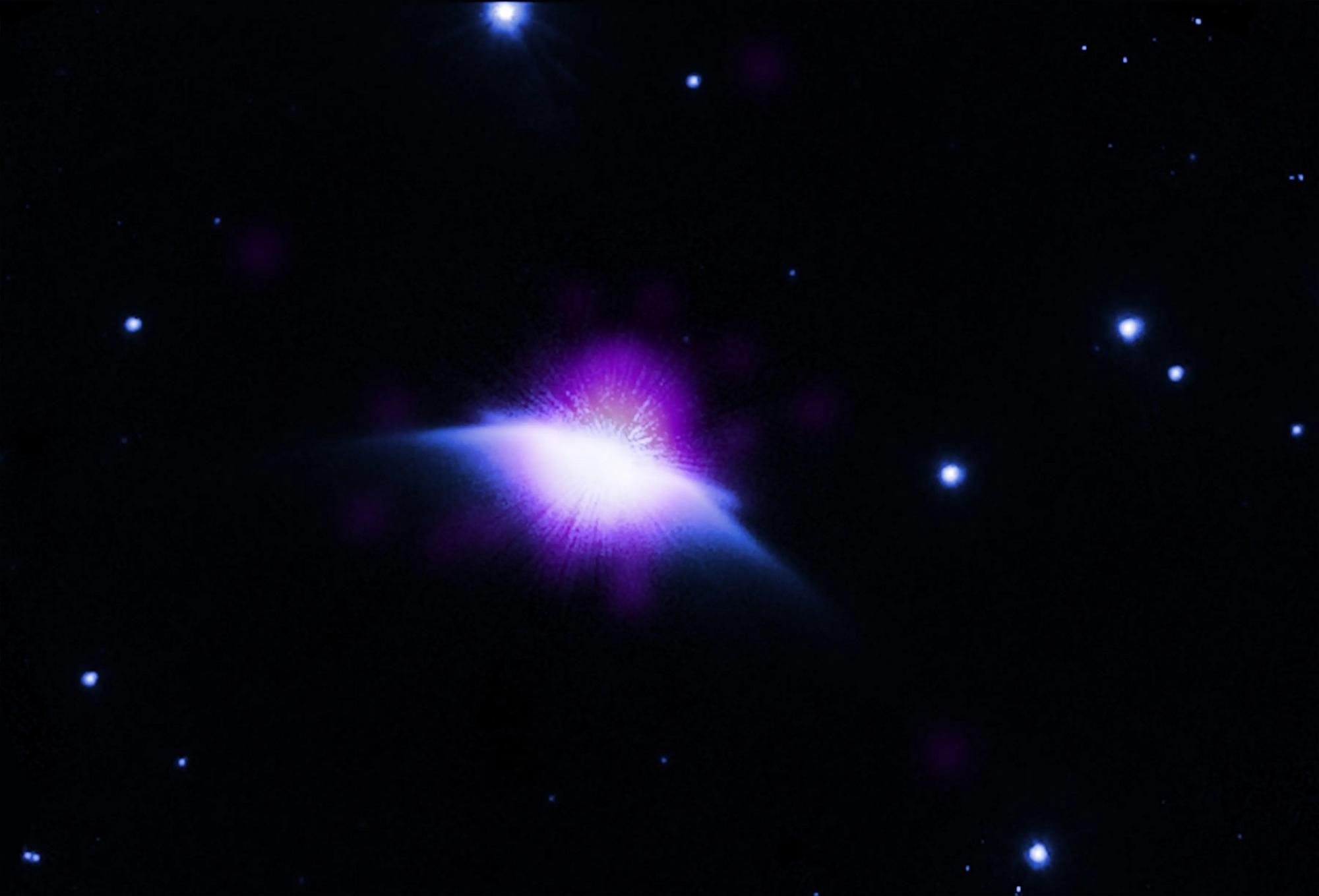
Imagine a stellar nursery, not of soft blankets and lullabies, but of raw, explosive energy. For the first time, we’ve witnessed a Sun-like star in its boisterous youth, caught in the act of expelling vast “bubbles” of plasma. This groundbreaking observation, made possible by the keen eye of NASA’s Chandra X-ray Observatory, offers an unprecedented peek into the formative years of stars, revealing a dynamic and powerful process that shapes their evolution.
—
## Stellar Blowouts and the Secrets They Hold
The universe is a master storyteller, and sometimes, it offers us a front-row seat to its most dramatic tales. Recently, astronomers using NASA’s Chandra X-ray Observatory captured something truly remarkable: a star, remarkably similar to our own Sun but in its much younger, more energetic phase, “blowing bubbles.” These aren’t the gentle, iridescent spheres of soap; these are colossal ejections of superheated plasma, vast clouds of stellar material expanding outward into the interstellar medium.
For decades, we’ve theorized about the energetic processes occurring during a star’s infancy. We understand that young stars are far more active than their mature counterparts, churning out powerful stellar winds and engaging in frequent, energetic outbursts. But to actually *see* this phenomenon, to witness these stellar bubbles forming and expanding, is a revelation. It’s like catching a toddler mid-tantrum, but on a cosmic scale, and with infinitely more profound implications.
The Chandra X-ray Observatory, with its unparalleled sensitivity to high-energy radiation, was instrumental in this discovery. X-rays are emitted by the hottest, most energetic plasma, making Chandra the perfect tool to probe these violent stellar events. The images and data collected are not just beautiful; they are rich with scientific information, helping us to unravel the complex physics of star formation and evolution.
What do these stellar bubbles tell us? They are powerful indicators of the star’s magnetic activity and its overall energy output. These outflows can significantly influence the surrounding interstellar gas and dust, potentially triggering or suppressing the formation of new stars in the vicinity. They also play a role in distributing heavy elements throughout galaxies, enriching the cosmic environment for future generations of stars and planets.
This discovery is more than just a captivating image; it’s a crucial piece of the cosmic puzzle. It allows us to refine our models of stellar evolution and to better understand the conditions under which stars, and ultimately planetary systems like our own, come into being. It reminds us that even stars we consider familiar, like our Sun, have gone through incredibly dynamic and powerful phases on their journey to becoming the stable, life-giving celestial bodies we know today. The universe, in its boundless wisdom, continues to surprise and inspire us with its grand, ongoing saga.
Leave a Reply