## Echoes of a Cosmic Cataclysm: What Cas A’s Chemical Signatures Tell Us
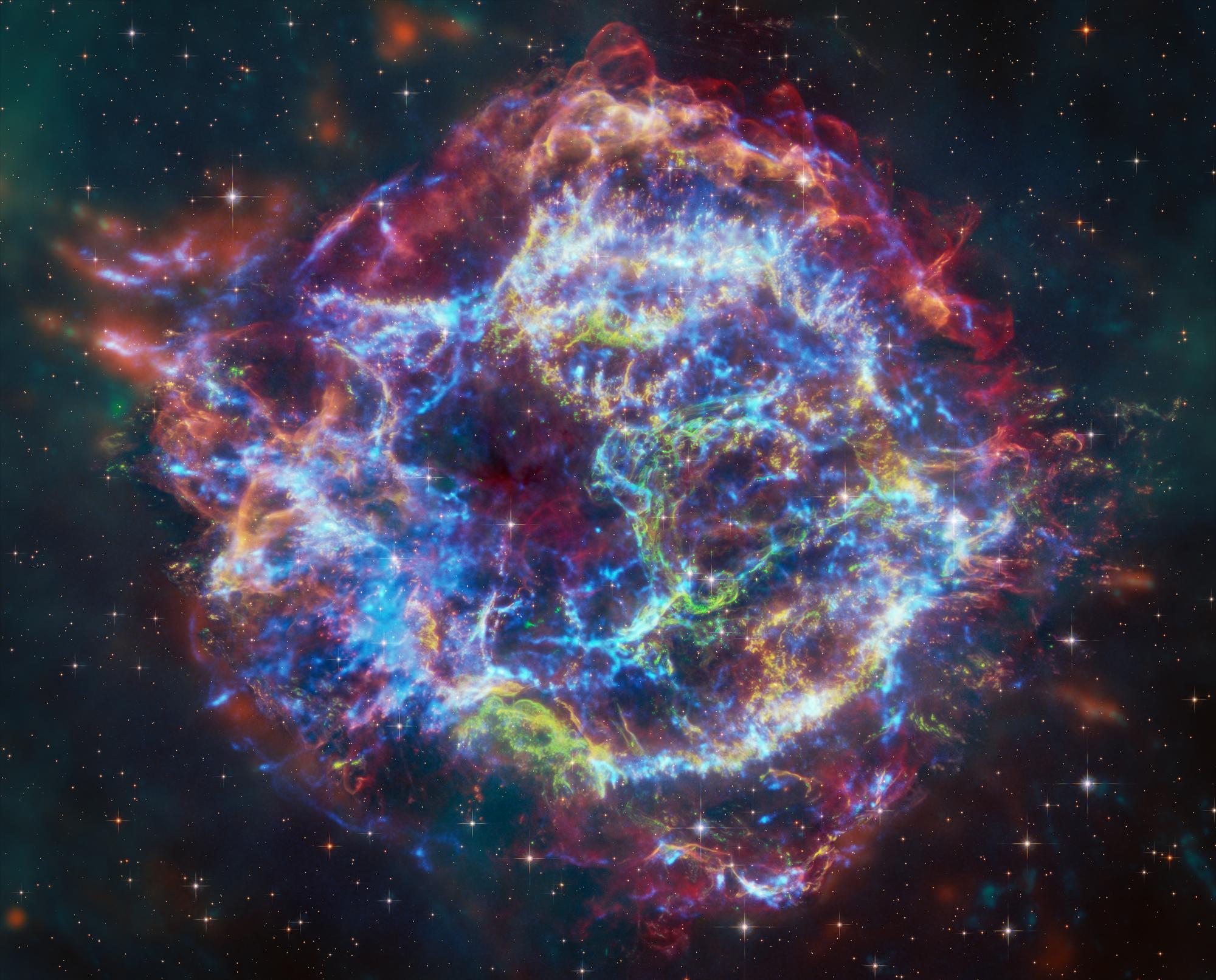
The universe, it turns out, is a remarkably thorough recycler. Even in the violent, explosive death throes of a star, the fundamental building blocks of everything we know are forged and flung across the cosmos. The recent findings from NASA’s XRISM mission, detecting chlorine and potassium in the debris of the Cassiopeia A (Cas A) supernova remnant, are a poignant reminder of this grand cosmic ballet.
For those of us who have spent years meticulously ensuring that every rivet, every weld, every carefully chosen material could withstand the brutal realities of spaceflight, these discoveries resonate on a different, yet equally profound, level. It’s about understanding the very essence of what makes things *work*, and what happens when they spectacularly *don’t*.
When I was deeply immersed in the intricate world of materials science for the Space Shuttle program, every decision was a careful calibration of strength, weight, thermal properties, and chemical compatibility. We grappled with how materials would behave under extreme temperature swings, intense radiation, and the vacuum of space. We analyzed the molecular structure of every component, understanding how it would react, or crucially, *not* react, to its environment. It was a constant quest for reliability, for predictability, for the assurance that our intricate creations would perform as designed, or at least fail in a way that was understood and manageable.
The detection of elements like chlorine and potassium in the aftermath of a stellar explosion is, in a way, an extreme extension of that very principle. It’s a testament to the fundamental physics and chemistry that govern the universe, even at its most chaotic. We learned to trust the predictable behavior of metals and composites under stress; now, we’re seeing how even the most cataclysmic events, like supernovas, adhere to these underlying rules, albeit on a grander scale.
Think about it: the very elements that are essential for life on Earth – components of our very bodies, the air we breathe, the water we drink – are distributed through these cosmic explosions. The chemical fingerprints left behind in Cas A are not just X-ray data points; they are the raw ingredients for future solar systems, future planets, and perhaps, future life.
My time spent ensuring the integrity of intricate systems designed to fly into space has instilled in me a deep appreciation for the underlying science. It’s a perspective that makes these astronomical discoveries not just fascinating, but deeply meaningful. It’s a glimpse into the universe’s enduring capacity to create, to transform, and to ultimately, seed the cosmos with the potential for new beginnings. It’s a profound reminder that even in destruction, there is creation, and that the fundamental building blocks of existence are constantly in motion, shaping the universe in ways we are only just beginning to fully comprehend.
Leave a Reply