## A Glimpse into the Cosmic Cradle: From Shuttle to Starstuff
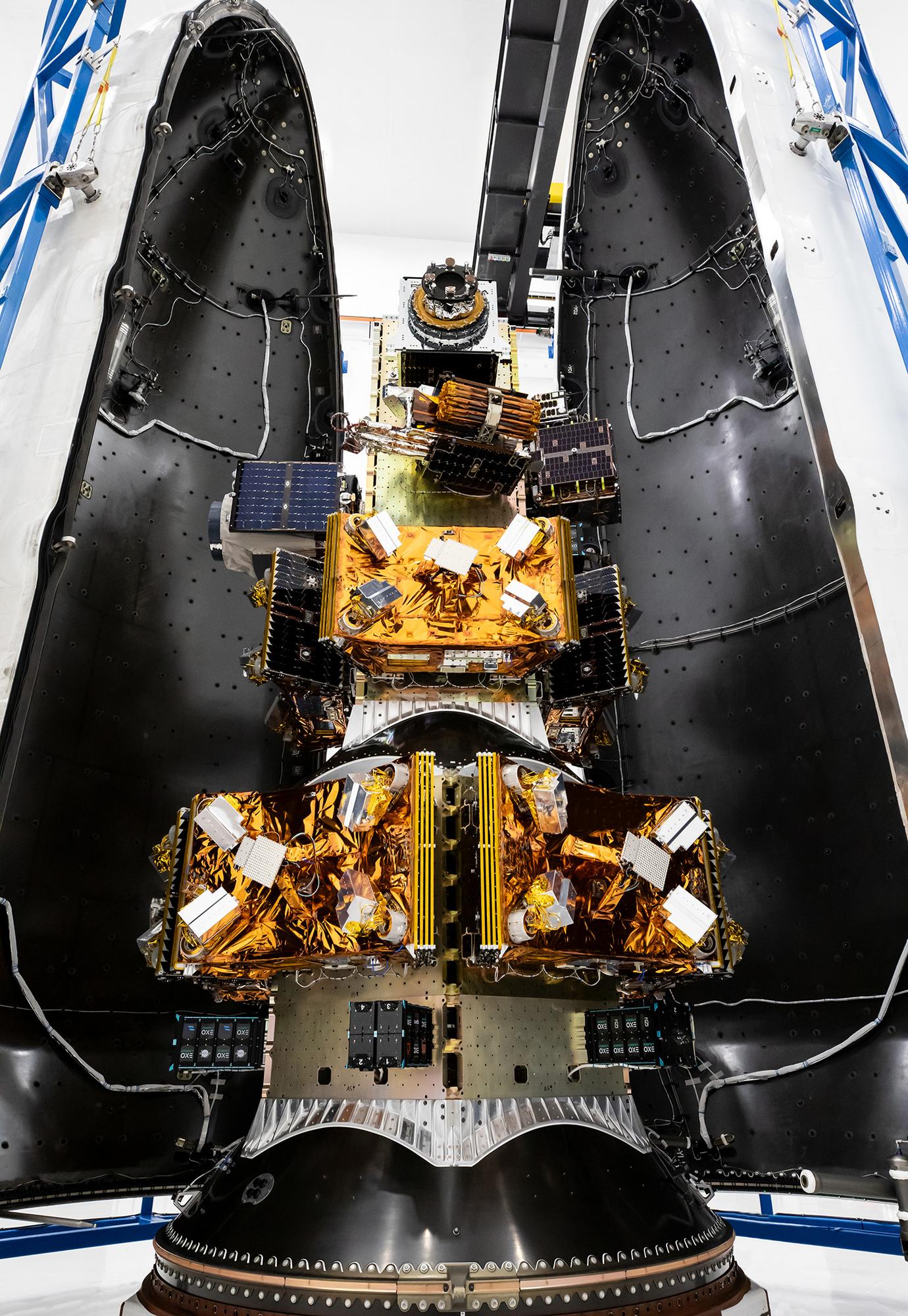
The image, sharp and imbued with the crispness of early January 2026, captures a pivotal moment in our ongoing quest to understand the universe. Nestled within the gleaming confines of a SpaceX Falcon 9 payload fairing, a trio of nascent explorers awaits their fiery ascent: NASA’s Pandora small satellite, the Star-Planet Activity Research CubeSat (SPARCS), and the Black Hole Coded Aperture Telescope (BlackCAT) CubeSat. This isn’t just a photograph; it’s a snapshot of ambition, a testament to human ingenuity pushing beyond terrestrial bounds. Launched on the eleventh of January from the hallowed grounds of Vandenberg Space Force Base, these missions are poised to unravel cosmic mysteries, from the subtle dance of exoplanets to the enigmatic whispers of black holes.
—
## Echoes of the Orbiter: A Mother’s Musings on the Launch of Pandora
The digital dust has settled on the launch of NASA’s Pandora mission, along with its companion CubeSats, SPARCS and BlackCAT. Sunday, January 11th, saw these scientific vessels embark on their journey from Vandenberg Space Force Base, a familiar launch cadence for those who’ve watched the skies for decades. As I see these small but mighty missions heading out, there’s a particular resonance, a subtle hum of experience that colors my perspective.
It’s fascinating to see the evolution of our space exploration tools. The sheer variety and miniaturization of these CubeSats, designed for specific, focused investigations, stand in stark contrast to the monolithic powerhouses of yesteryear. Yet, the fundamental principles of ensuring these delicate instruments survive the brutal journey to space remain timeless. My mind drifts back to the meticulous attention paid to every weld, every bolt, every thermal blanket designed to protect critical components from the unforgiving vacuum and extreme temperatures. The materials we stressed, the processing techniques we refined – they were all geared towards an ultimate goal: flawless performance in the most hostile environment imaginable.
When I look at these new missions, I see the echoes of that same dedication, albeit applied with different technologies and scales. The stringent requirements for reliability, the rigorous testing, the relentless pursuit of eliminating every potential failure point – these aren’t just abstract concepts; they are ingrained habits of thought. Even now, with my focus shifted to the equally demanding, albeit terrestrial, world of raising four children, the instincts honed over years of ensuring the integrity of complex aerospace systems remain sharp. You learn to anticipate the unexpected, to scrutinize every detail, and to understand that even the smallest oversight can have profound consequences.
These missions, like Pandora with its focus on exoplanet atmospheres and the others delving into stellar activity and black hole phenomena, represent the next chapter in our cosmic narrative. They are the culmination of countless hours of design, engineering, and the unwavering belief that we can, and must, continue to reach for the stars. And as I watch, a quiet satisfaction settles. It’s the feeling of seeing a lineage of scientific endeavor continue, a testament to the enduring spirit of exploration that, in its own way, is as fundamental to humanity as nurturing the next generation.
Leave a Reply