## Cosmic Dust Bunnies and Stellar Fireworks: A Peek Through the Lens of Giants
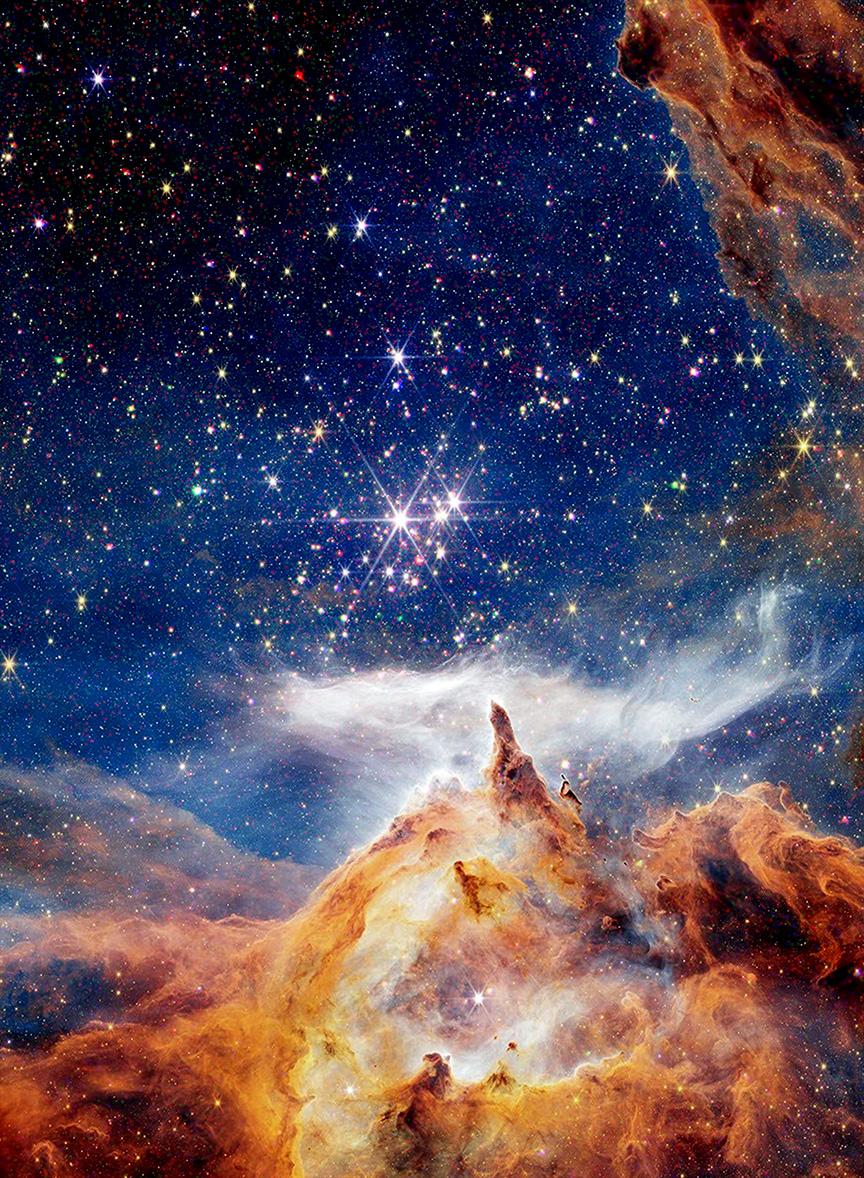
Imagine a celestial snow globe, not with gentle flakes, but with dazzling bursts of energy painting a cosmic panorama. That’s precisely what NASA’s latest image, a collaboration between the James Webb Space Telescope (JWST) and the Chandra X-ray Observatory, presents us with. It’s a scene where the velvety darkness of space is punctuated by the twinkling lights of active stars, each a tiny beacon of intense, high-energy activity.
The JWST, in its breathtaking infrared glory, renders this stellar landscape with a palette reminiscent of a serene winter scene. Think of the soft hues of a frosted windowpane, the gentle greens and blues, all swirled with the warmth of red. But then, Chandra enters the frame, its X-ray vision cutting through the ambient glow to reveal the true, energetic nature of these celestial bodies. Its data, translated into vibrant reds, greens, and blues, erupts like miniature fireworks, highlighting the most dynamic and explosive processes occurring within these distant suns.
It’s a layered view, a testament to the power of combining different observational tools. The JWST gives us the broad, beautiful strokes of the cosmic canvas, while Chandra provides the sharp, fiery details of stellar fireworks. Together, they offer a more complete understanding of these twinkling lights – not just as distant, passive points of light, but as active, dynamic entities in a constant state of energetic flux.
—
## From Orbital Mechanics to Diaper Dynamics: A Parent’s Perspective on Cosmic Wonders
It’s funny how the universe has a way of mirroring itself, even from light-years away. Staring at this incredible image from NASA, where the James Webb Space Telescope and Chandra X-ray Observatory have teamed up to capture stellar activity, I can’t help but be reminded of the sheer complexity and interconnectedness of… well, everything.
Webb, with its infrared gaze, paints a picture that’s almost serene, like looking out at a quiet, starlit night. It’s the broad brushstrokes, the overall composition that gives you that sense of wonder, of distance, of vastness. It’s the calm before the storm, the quiet hum of potential.
And then Chandra comes in, sharp and brilliant, with its X-ray vision. It’s not just about capturing the beauty; it’s about understanding the *process*. Those bursts of color, representing high-energy activity from active stars – that’s where the real story lies. It’s the energetic events, the unpredictable flares, the intense output that truly defines what’s happening out there.
My time spent wrestling with the intricacies of material science and ensuring the safety of delicate, high-stakes projects in the space industry instilled in me a deep appreciation for how subtle differences can lead to vastly different outcomes. It’s about understanding the underlying mechanisms, the potential failure points, and the inherent energies at play. That same meticulous attention to detail, that constant questioning of “what if” and “how does it really work,” is what I now apply to my daily life.
Because when you’re managing the delicate balance of nap times, snack schedules, and the unpredictable outbursts of four children, you learn to appreciate both the grand, overarching plan (like Webb’s view) and the immediate, high-energy moments that demand your full attention (like Chandra’s bursts). You see the beauty in the quiet moments of contented play, and you understand the critical importance of being prepared for the sudden, explosive needs that arise without warning.
This image, therefore, is more than just a pretty picture to me. It’s a reminder that even in the most seemingly distant and abstract realms, there’s a fundamental dance between the serene and the dynamic, the planned and the explosive. It’s a dance I’ve learned to navigate both in the vacuum of space and the energetic chaos of a busy household, and I wouldn’t trade either perspective for the world.
Leave a Reply