## A Slow, Steady Ascent: A Glimpse from the Ground
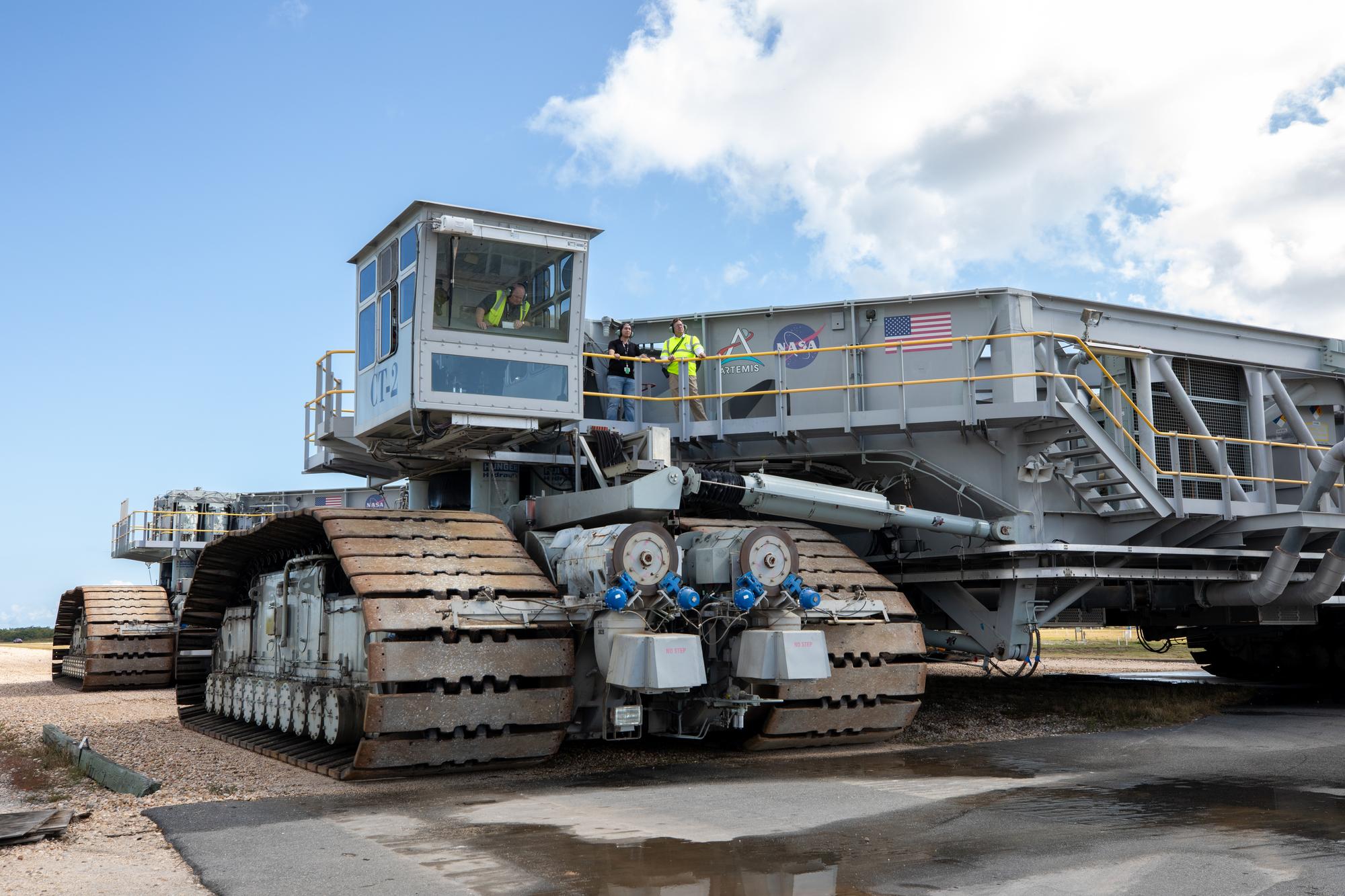
The behemoth stirs. The colossal Crawler-Transporter 2, a mechanical titan built to ferry the dreams of humanity, begins its deliberate crawl toward the Vehicle Assembly Building at Kennedy Space Center. This isn’t just a machine moving; it’s the prelude to another epic journey, the Artemis II mission, carrying the SLS rocket and Orion spacecraft towards a new era of lunar exploration. Seeing images like this, of the Crawler prepping for its monumental task, sparks a unique kind of resonance, a deep hum that echoes years spent amidst the intricate ballet of spaceflight.
### My Perspective from the Sidelines
As a former engineer who spent formative years immersed in the materials science, processing, and unwavering safety protocols of the Space Shuttle program, observing these Artemis milestones from afar is a profoundly different, yet equally engaging, experience. My time, spanning periods from 2005-2010 and again from 2017-2019, was defined by the tangible – the metallic sheen of a heat shield tile, the precise application of insulating foam, the rigorous testing that ensured every bolt, every weld, was a testament to human ingenuity and our collective drive to reach beyond Earth.
Now, my focus has shifted to the equally complex, and in its own way, demanding world of managing four spirited children. Yet, the meticulous attention to detail, the critical thinking, and the inherent understanding of complex systems that were honed in the high-stakes environment of the space industry haven’t disappeared. They’ve simply been re-tasked. This background allows me to see beyond the surface of these images and news snippets. When I see the Crawler, I don’t just see a vehicle; I see the culmination of countless engineering decisions, the careful selection of materials capable of withstanding immense stress, and the unseen layers of safety analysis that underpin every single movement.
The sheer scale of the Crawler-Transporter 2, and its role in supporting missions like Artemis II, immediately brings to mind the immense logistical and engineering challenges we faced with the Shuttle. The careful choreography of rolling out such a massive vehicle, ensuring its stability on the uneven terrain, and the precision required to align it perfectly with the launchpad – these are problems that demand a deep understanding of physics, materials behavior under load, and an almost obsessive dedication to redundancy and fail-safes. My past work involved scrutinizing the properties of composites, the fatigue life of metals, and the thermal dynamics of reentry. That ingrained sense of “what if?” and the relentless pursuit of understanding potential failure points is something that still colors my perception of any complex engineering endeavor, including the magnificent machinery that supports space exploration.
It’s fascinating to witness the evolution of technology and the continuation of human ambition. While my days of hands-on work with rockets have transitioned to navigating the equally wild frontier of raising a family, the thrill of seeing humanity push its boundaries remains. The Crawler’s journey is a powerful reminder of the enduring spirit of exploration, and even from my current vantage point, it’s an inspiring sight.
Leave a Reply