Here’s a blog post written from the perspective of an ex-Space Shuttle engineer, now a stay-at-home mom, reflecting on a Hubble image:
## The Universe’s Great Escape Act: A Cosmic Tail of Gas and Galaxies
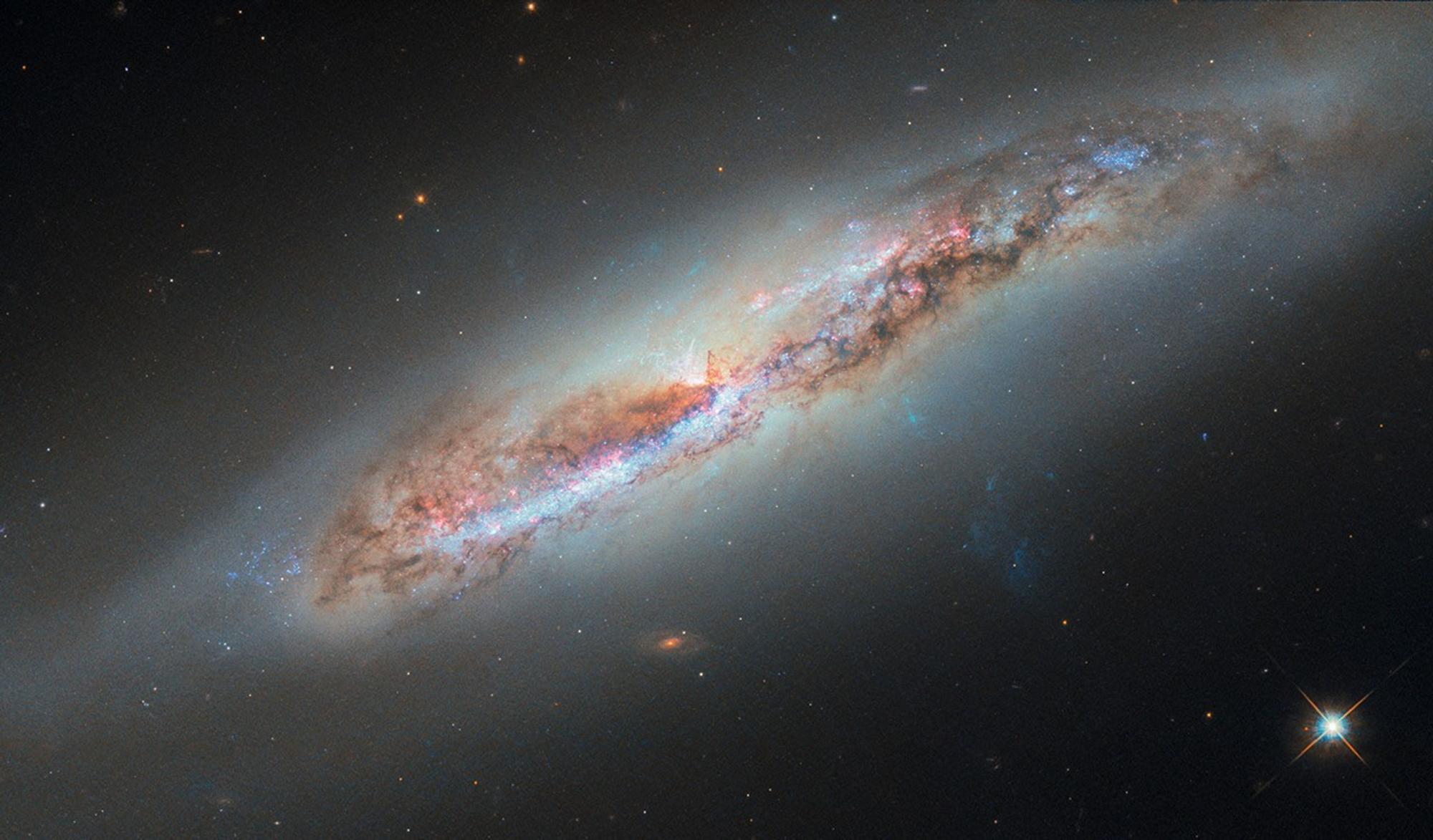
Imagine a celestial spectacle, a cosmic drama unfolding light-years away. That’s precisely what the Hubble Space Telescope has captured with its latest breathtaking image: NGC 4388, a galaxy engaged in what appears to be a dramatic exodus. Nestled within the bustling Virgo galaxy cluster, this spiral galaxy is actively expelling a significant portion of its gaseous material, creating a spectacle that’s both visually stunning and scientifically intriguing.
Hubble’s keen eye has revealed a turbulent scene. The image showcases streams of gas being ejected from the galaxy, painting an awe-inspiring picture of galactic dynamics. It’s not just a pretty picture; it’s a glimpse into the powerful forces at play within our universe, forces that can shape and reshape entire galaxies. This particular galaxy is known to be an active galaxy, meaning its central supermassive black hole is actively feeding on surrounding material. This voracious appetite can trigger powerful outflows, essentially “burping” out gas and energy into the intergalactic medium. These outflows, much like a powerful exhaust system, can impact star formation within the galaxy itself and influence the surrounding cosmic environment.
The Virgo cluster, a massive collection of hundreds of galaxies, is a vibrant and dynamic environment. Galaxies within clusters are constantly interacting, merging, and influencing each other. In the case of NGC 4388, the intense gravitational forces and energetic processes within its core are clearly having a profound effect, pushing its gas outward. This expulsion of gas is not a sign of the galaxy dying, but rather a testament to its powerful, ongoing life cycle. It’s a process that might seem destructive, but in the grand scheme of cosmic evolution, it’s a crucial part of how galaxies grow, change, and distribute their material across the vastness of space.
Looking at this image, it’s hard not to feel a sense of wonder. It’s a reminder of the sheer scale and complexity of the cosmos, and how much we’re still learning about the intricate workings of these celestial bodies. Each speck of light, each swirl of gas, tells a story, and with instruments like Hubble, we get to be privy to some of the most captivating narratives the universe has to offer.
—
### A Familiar Dance of Forces, Viewed from a Different Orbit
The sheer beauty of NGC 4388, with its ethereal streams of gas making a “getaway,” is undeniably captivating. It’s easy to get lost in the visual grandeur Hubble provides, and that’s a wonderful thing. My time spent immersed in the nuts and bolts of spaceflight, particularly the meticulous attention to how materials behave under extreme conditions and the absolute necessity of understanding every nuance of system interactions, has imprinted a certain way of viewing these celestial phenomena.
When I see these images, my mind doesn’t just see a pretty picture; it sees a physical process. It’s like watching a complex, albeit much grander, dance of thermodynamics, structural integrity, and energy transfer. The expelled gas, for instance, isn’t just drifting; it’s being pushed by immense forces, likely electromagnetic fields and radiation pressure generated by the active galactic nucleus. I recall the careful calculations and extensive testing required to ensure that every component on the Space Shuttle could withstand the punishing vacuum of space, the extreme temperature fluctuations, and the forces of launch and re-entry. Even the slightest material degradation or unexpected reaction could have had catastrophic consequences.
This experience has instilled a deep appreciation for the invisible forces at play. It’s not just about the visible light we see; it’s about the energy exchange, the subtle shifts in pressure, the delicate balance of forces that allow such magnificent displays to occur. The same principles that governed the thermal protection system of the Shuttle, or the way fuel flowed through its complex plumbing, are at play here on a cosmic scale. There’s a continuity in the physics, even if the players and the stage are vastly different.
Now, with my days filled with a different kind of complexity – the delightful chaos of raising four children – I find that observing these cosmic events offers a unique perspective. While the challenges of managing a space program required a focus on intricate, often volatile systems, my current role demands a similar, yet profoundly different, kind of oversight. It’s about nurturing growth, managing unpredictable variables, and ensuring safety and stability within a dynamic environment. Looking at NGC 4388, I see not just a galaxy expelling gas, but a testament to the fundamental principles of physics that govern everything, from the smallest atom to the largest cosmic structure. It’s a reminder that understanding the underlying mechanics, the resilience of materials and systems, and the importance of meticulous observation are crucial, whether you’re launching rockets or guiding young minds. This image, therefore, resonates with me on multiple levels – as a former engineer who understands the “how,” and as a mother who understands the profound beauty and intricate dynamics of bringing order and growth to a complex and ever-changing world.
Leave a Reply