Here’s a blog post crafted from the perspective of an ex-Space Shuttle engineer, now a stay-at-home mom, reflecting on the Artemis II image:
## A Glimpse of the Future, Under a Familiar Moon
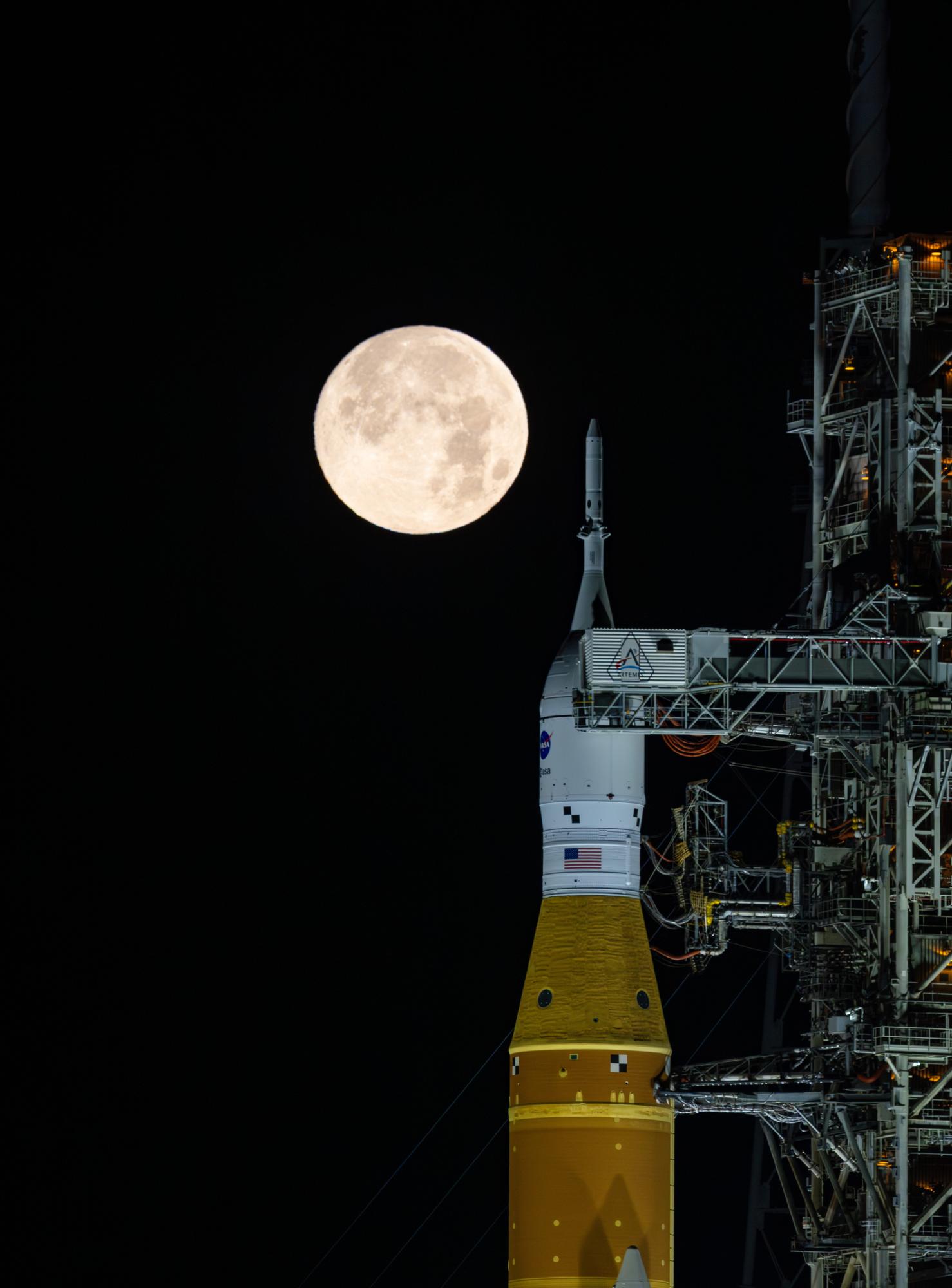
There’s a certain magic to seeing a rocket bathed in moonlight, isn’t there? It evokes a primal sense of wonder, a connection to the vastness that has always drawn humanity skyward. And this image, this “Full Moon over Artemis II,” really hits home. The sheer scale of the Space Launch System, towering on the pad with the Orion capsule perched atop, is undeniably impressive. It’s a stark reminder that the dream of sending humans back to the Moon, and beyond, is alive and kicking.
Seeing this scene, framed by the ethereal glow of a full moon, brings a rush of memories. It’s more than just a beautiful photograph; it’s a testament to the relentless spirit of exploration. My days might now be filled with the beautiful chaos of raising four children, a mission that demands its own unique blend of problem-solving and unwavering dedication, but my mind still drifts to the principles that guided so much of my past.
When I look at that colossal rocket, I can’t help but think about the intricate ballet of engineering that must have preceded this moment. From the tiniest bolt to the massive engines, every component is a universe of its own, a culmination of countless hours of design, testing, and meticulous refinement. It’s the same meticulousness that used to consume my days, poring over material specifications, stress analyses, and the sheer, unyielding demand for safety that underpins every single decision made in the pursuit of spaceflight.
The lessons learned from decades of sending humans and hardware into the harsh vacuum of space are not easily forgotten. They become ingrained, a part of your very understanding of how things work, and more importantly, how they *must* work. The challenges are immense, of course. The environment out there is unforgiving, demanding materials that can withstand extreme temperatures, radiation, and the constant threat of micrometeoroids. The processing of these materials, ensuring their integrity and performance under immense pressure and stress, is a science and an art form in itself.
This image represents not just a technical achievement, but a continuation of a legacy. It’s the culmination of generations of engineers and scientists building upon the foundations laid by those who came before. And while my direct involvement in the day-to-day operations may have shifted, the fundamental understanding of what it takes to get to orbit, to push the boundaries of what’s possible, remains. It’s a perspective that colors how I view these advancements, appreciating the deep, often unseen, groundwork that makes such a spectacular vision a tangible reality.
Seeing Artemis II poised for its journey, under that same ancient moon that has always been a beacon for us, fills me with a quiet sense of pride and anticipation. It’s a promise of new discoveries, new human endeavors, and a future where the stories of space exploration continue to unfold, one launch at a time.
Leave a Reply