Here’s a blog post from the perspective of an ex-Space Shuttle Materials and Processing Engineer turned stay-at-home mom, reflecting on NASA’s work with subscale research aircraft:
## Tiny Wings, Big Dreams: A Peek Behind the Curtain at NASA’s Flight Research
The hum of an engine, even a scaled-down one, carries a familiar resonance. It’s a sound that whispers of possibility, of pushing boundaries, and of the relentless pursuit of knowledge that has always defined space exploration. Even from my current vantage point, surrounded by the joyful chaos of four little ones, my mind often drifts back to those days, to the intricate dance of science and engineering that brought us to the stars.
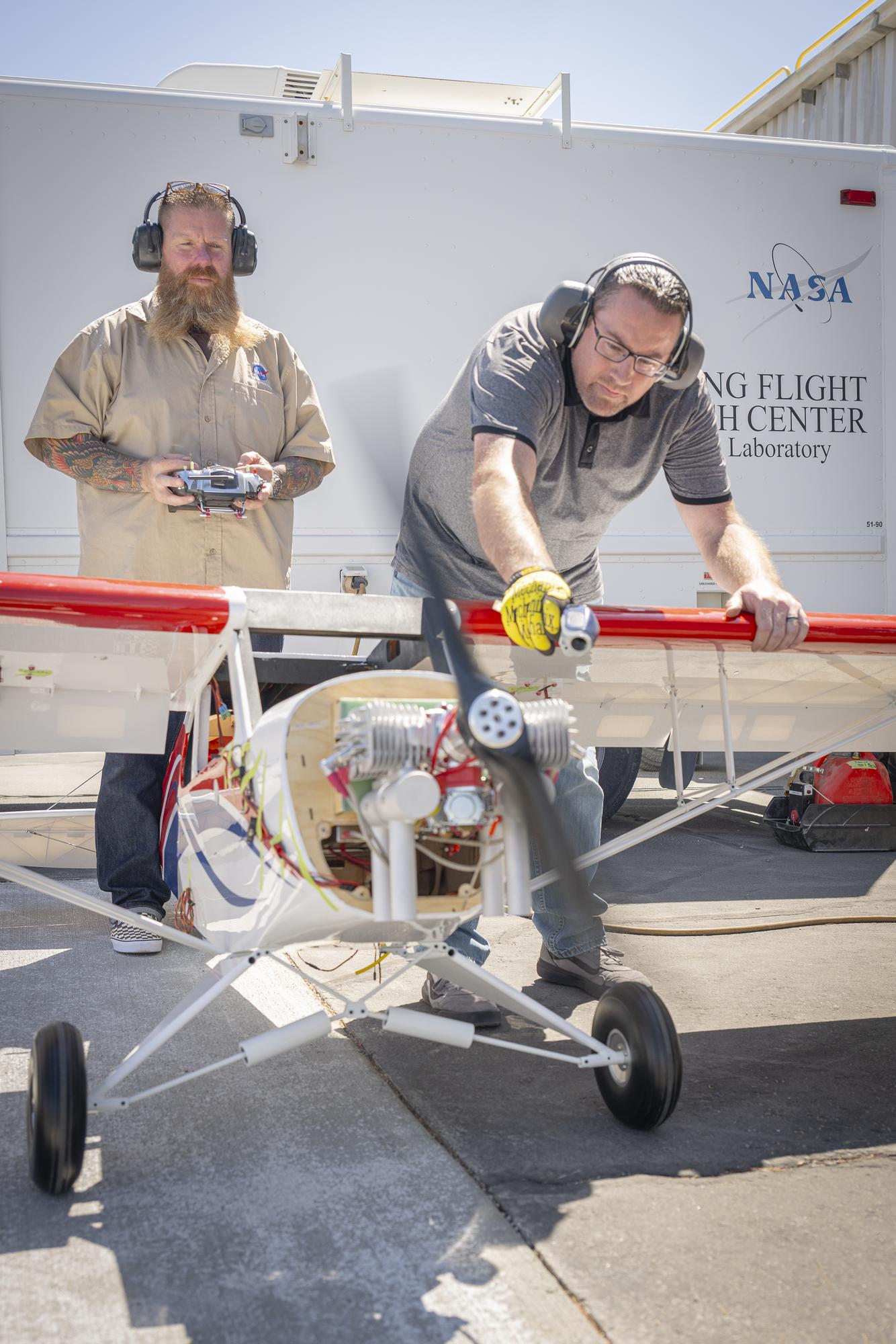
Recently, I saw a little snippet about NASA’s Armstrong Flight Research Center and their work on a new subscale research aircraft. It’s a small piece of news, easy to overlook, but for me, it’s a powerful reminder of the foundational work that underpins every giant leap. These aren’t just model planes; they are sophisticated tools, meticulously crafted and tested, designed to unlock critical data before committing to full-scale development. Think of it as building a perfect LEGO replica before embarking on constructing a life-sized castle.
The image itself, of technicians running preliminary engine checks, struck a chord. There’s a focused intensity in their stance, a quiet confidence that comes from understanding the immense responsibility held within those delicate components. It’s a responsibility I know well, having spent my time ensuring the very materials that would withstand the fiery embrace of launch and the brutal vacuum of space were absolutely flawless. Every rivet, every weld, every composite layer – they all held the hopes and dreams of countless people.
When you’re deep in the weeds of material science, analyzing thermal properties, stress tolerances, and the long-term effects of extreme environments, you develop a certain appreciation for the incremental steps. You learn that groundbreaking achievements are rarely born in a single flash of genius, but rather from a cascade of meticulous research, rigorous testing, and a willingness to learn from every data point, even the unexpected ones. These subscale aircraft are exactly that – an extension of that iterative process, allowing for an unprecedented level of control and observation in a cost-effective manner.
The ability to conduct such detailed engine checks on a smaller, more manageable platform is invaluable. It means they can explore novel propulsion systems, refine aerodynamic designs, and gather crucial performance data without the monumental investment and risk of a full-sized prototype. This kind of pragmatic, hands-on research is precisely what keeps innovation alive and well within organizations like NASA. It’s about smart development, building confidence through validated understanding.
While my days are now filled with different kinds of complex calculations – the logistics of snack times and bedtime stories – the core principles of engineering remain. The same dedication to detail, the same unwavering commitment to safety, and the same passion for discovery are present in that small lab at Armstrong as they were in the cavernous Vehicle Assembly Building. It’s a testament to the enduring spirit of exploration, and it’s heartening to see that spirit manifesting in such intelligent and efficient ways. These tiny wings are indeed carrying big dreams, and the future of flight is all the brighter for it.
Leave a Reply