## The Persistence of Winter: A View from Orbit
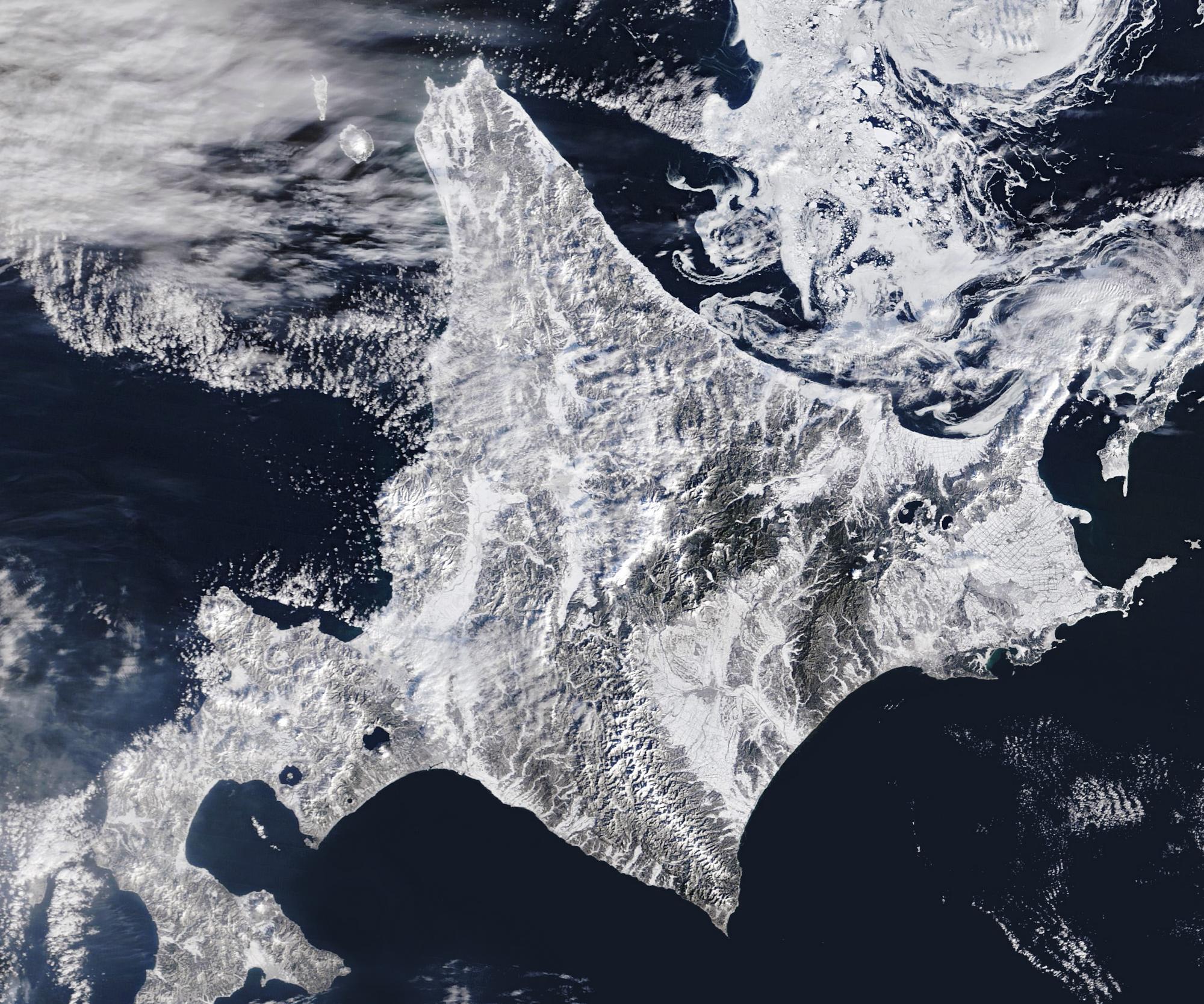
Looking down at our planet, there are certain phenomena that truly underscore its dynamic nature. The image, capturing a truly formidable winter landscape across Hokkaido, Japan, is a testament to these powerful, recurring cycles. It’s a scene that, from a certain perspective, tells a story of immense forces at play – forces that shape not just weather patterns, but also the very materials we rely on for our most ambitious endeavors.
This particular snapshot showcases a region renowned for its deep snowpack, with cities like Sapporo experiencing extended periods of winter and substantial accumulation. It’s a vivid reminder of how Earth’s environment can present significant challenges, but also how resilient life – and human ingenuity – can be in adapting to them. Witnessing such widespread, intense weather from above brings to mind the constant need for robust systems and careful consideration of environmental factors.
—
## From the Ground Up: What Extreme Weather Teaches Us About the Future of Space
You know, it’s funny. I used to spend my days staring at complex schematics, analyzing the structural integrity of exotic alloys, and meticulously scrutinizing procedures that ensured things didn’t go spectacularly wrong miles above our heads. Now, my “control room” is a bit more… active. It’s filled with the delightful chaos of four children, a constant ebb and flow of snacks, homework, and the occasional debate over who gets the blue crayon.
But even amidst the joyful pandemonium, my mind – shaped by years in the space industry, particularly my time working with the Space Shuttle program on materials, processing, and safety – can’t help but draw parallels. Seeing images like this one of an incredibly snowy Hokkaido, with its deep accumulations and prolonged winter, sparks a familiar set of thoughts.
When you’re tasked with making sure a spacecraft, a marvel of engineering designed to withstand the vacuum of space and re-enter our atmosphere at incredible speeds, is safe and reliable, you learn to respect the raw power of nature. My focus, from 2005-2010 and then again from 2017-2019, was on the “stuff” – the materials that form the backbone of these machines. We were constantly thinking about how materials behave under extreme conditions: the searing heat of re-entry, the bone-chilling cold of space, the corrosive effects of various environments.
Hokkaido’s immense snowfall, while a terrestrial phenomenon, is a perfect illustration of the kind of environmental extremes we had to account for. Think about it: we designed components to withstand temperatures that would freeze solid or boil off other materials. We developed coatings and processes that could resist abrasion from micrometeoroids or the harsh chemical interactions in space. The lessons learned from the Shuttle program, about the critical importance of material selection and robust processing, are deeply ingrained.
And then there’s the safety aspect. Every decision, every weld, every bolt had to be scrutinized through the lens of safety. A failure on Earth can be an inconvenience; a failure in space can be catastrophic. This mindset, this absolute prioritization of safety derived from years of dealing with high-stakes engineering, doesn’t just switch off.
Now, as a stay-at-home mom, my focus has shifted from the metallic skin of rockets to the well-being of my children. But that deep understanding of material science and the unwavering commitment to safety? It’s still there. It informs how I approach even the simplest tasks, from choosing safe toys to ensuring our home is a secure environment.
Looking at that incredible snowscape in Japan, I see more than just a beautiful, albeit challenging, winter scene. I see a reminder of the fundamental principles that guided my previous work: the power of natural forces, the absolute necessity of understanding materials, and the non-negotiable requirement for safety in every undertaking. These aren’t just lessons for engineers; they’re lessons for life. And perhaps, as humanity continues its journey into space, pushing the boundaries of exploration, the same meticulous attention to detail, material integrity, and paramount safety will be just as crucial, whether we’re building a new lunar base or simply making sure everyone gets home for dinner.
Leave a Reply