## The Familiar Flicker of a Returning Flame: More Than Just a Landing
The sight of a capsule descending, a fiery kiss with the atmosphere, always stirs something deep within. It’s a symphony of physics and engineering, a testament to countless hours of meticulous design and rigorous testing. For those of us who spent our careers wrestling with the raw, unforgiving elements of spaceflight, these returning sparks are more than just news; they are echoes of our own past, reminders of the intricate dance between human ingenuity and the vast unknown.
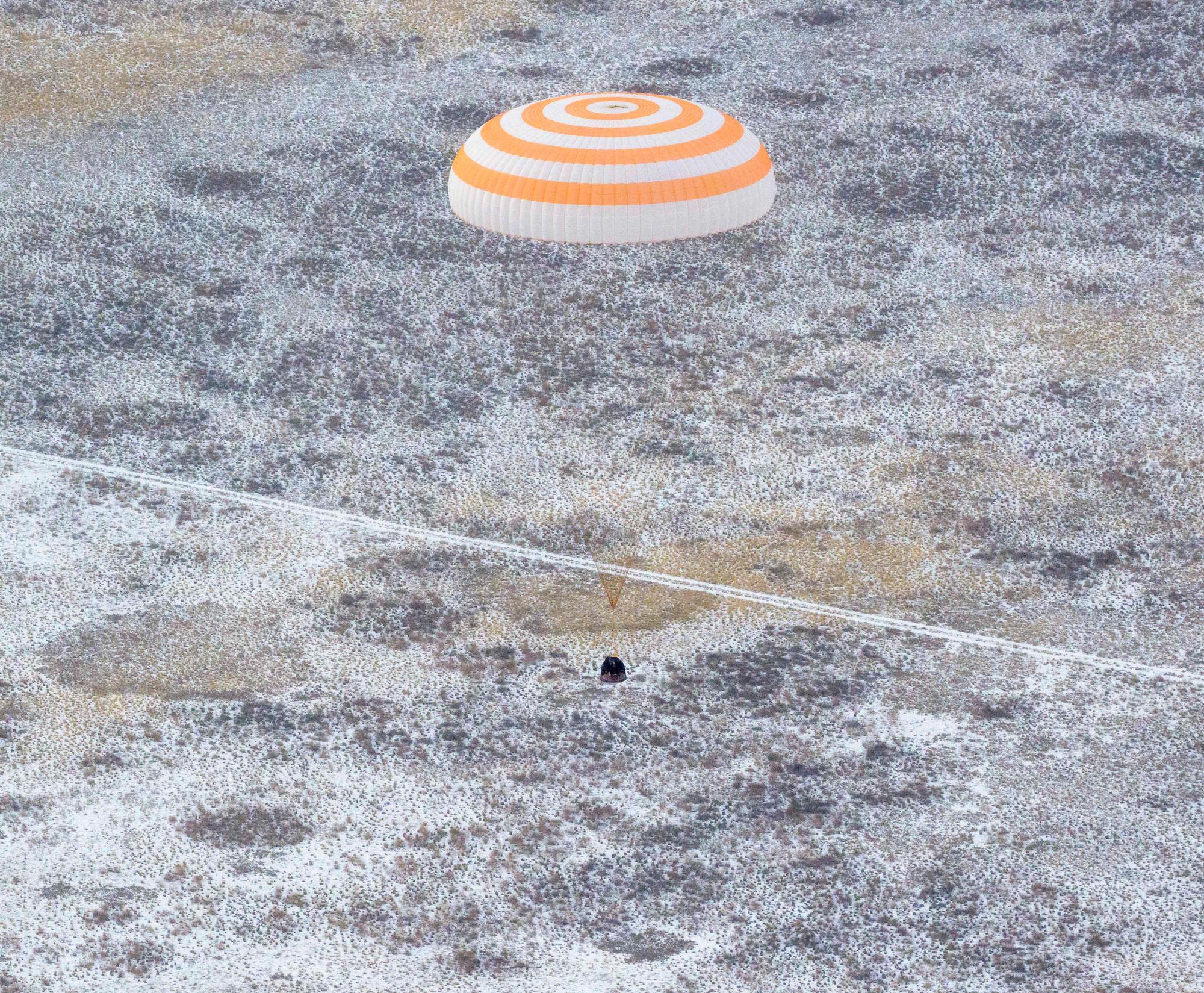
Watching the Soyuz MS-27 make its familiar descent to the plains of Kazakhstan, carrying Expedition 73 astronaut Jonny Kim and his Roscosmos crewmates Sergey Ryzhikov and Alexey Zubritsky, is a moment that resonates. It’s a successful conclusion to a complex mission, a safe return home after months spent orbiting our planet.
My own journey through the space industry, particularly during the twilight years of the Space Shuttle program and its subsequent resurgence in different forms, was immersed in the very fabric of these missions. My focus was on the materials that would withstand the unimaginable stresses of launch and re-entry, the intricate processes that brought them to life, and the unwavering commitment to safety that underpinned every single decision. From the thermal protection systems that shielded us from the inferno of atmospheric entry, to the robust structures that bore the brunt of launch vibrations, understanding how materials behave under extreme conditions was paramount. It’s not just about building something that *can* survive; it’s about building something that *will*, with a margin of safety that allows for the unexpected, because in space, the unexpected is often the norm.
This perspective, honed by years of scrutinizing every weld, every alloy, and every theoretical failure point, naturally colors how I view these events now. It’s not just about the astronauts’ safe return, as incredibly important as that is. It’s about the integrity of the vehicle itself. I can’t help but think about the thermal blankets, the heat shield tiles – or in the case of the Soyuz, its specific ablative materials – and the engineering that went into ensuring they performed as designed. The calculations, the simulations, the countless tests… they all converge in that moment of landing.
There’s a deep satisfaction in seeing that. It’s a quiet affirmation of the principles we worked by. Even from my current vantage point, far removed from the launch pads and control rooms, the fundamental laws of physics and the dedication to meticulous engineering are immutable. The mission might be different, the spacecraft a familiar yet evolved design, but the core challenges remain the same. And in that descending fireball, I see not just a landing, but a validation of a lifetime dedicated to making the impossible, possible, and most importantly, safe.
Leave a Reply