## The Unseen Rituals of Orbit: What Housekeeping in Space Taught Me About the Shuttle
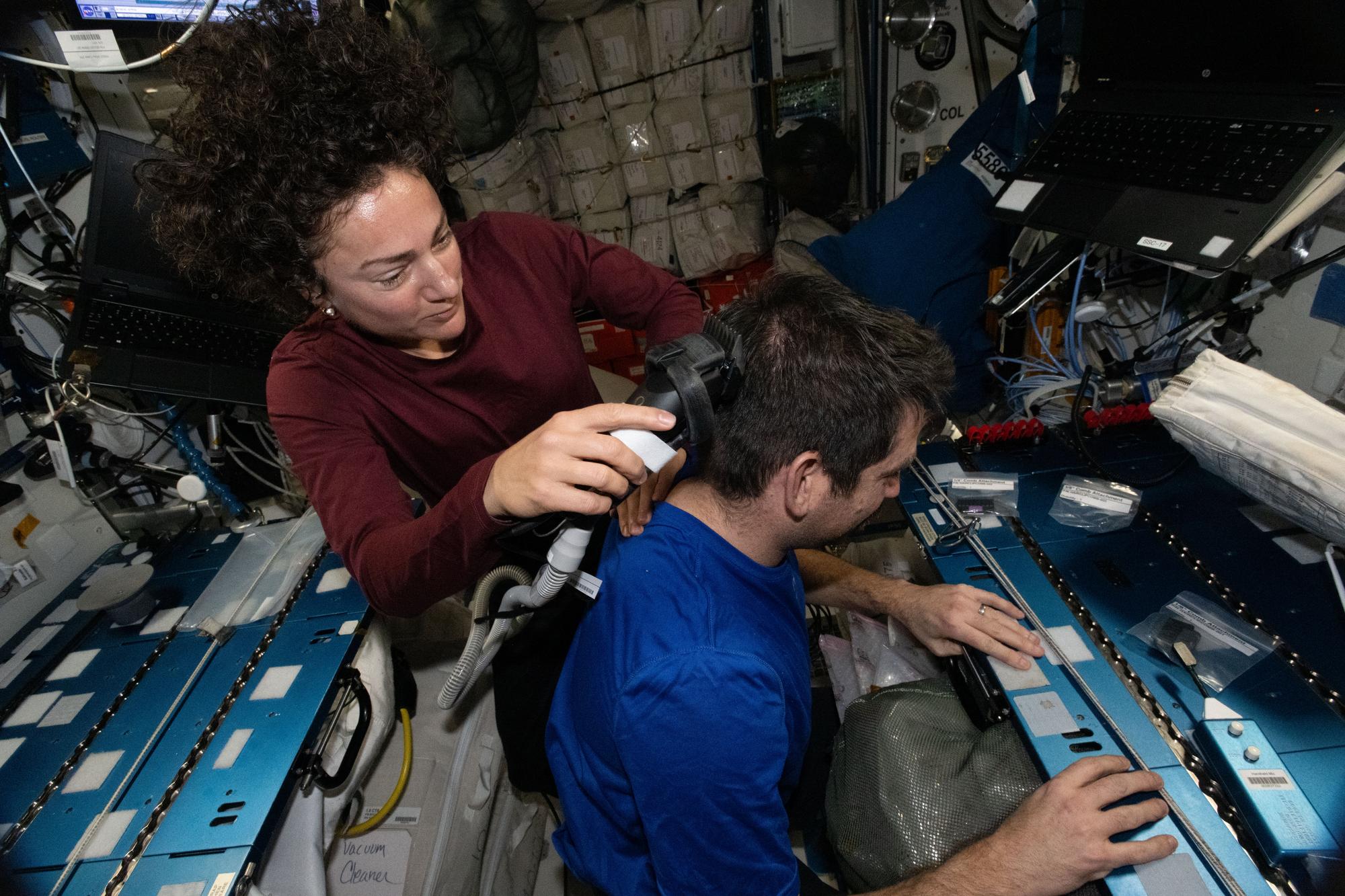
Imagine this: the vast, silent canvas of space, a breathtaking panorama of Earth unfurling below. It’s a scene we often associate with thrilling launches, groundbreaking experiments, and the awe-inspiring achievements of humanity reaching for the stars. But tucked within that grandeur are the mundane, the everyday, the utterly essential – tasks like cleaning the shower drain or, as this recent image reminds us, getting a haircut.
This snapshot from the International Space Station, showing an astronaut meticulously trimming another’s hair with a vacuum-assisted razor, might seem like a simple domestic moment. Yet, for those of us who spent our careers immersed in the complex ballet of getting to and from orbit, these glimpses into the practicalities of life in space resonate deeply. It’s a reminder that even at 250 miles above our heads, the fundamental principles of maintaining a safe and functional environment remain paramount.
When I think about the Space Shuttle program, the gleaming metallic leviathan that carried so many dreams, my mind doesn’t just go to the powerful engines or the intricate avionics. It goes to the very fabric of its existence – the materials. From the heat shield tiles designed to withstand re-entry’s inferno to the seals that kept the atmosphere contained, every component was a testament to careful consideration and rigorous processing. The goal was always the same: to ensure that the crew, living and working within that metal shell, remained protected.
This focus on containment, on preventing the spread of microscopic debris, is something that echoes in the ISS image. In microgravity, loose hair clippings don’t just fall to the floor; they become airborne particles that can infiltrate sensitive equipment, clog air filters, and even pose a respiratory hazard. The sophisticated vacuum system used for the haircut is a direct descendant of the same engineering mindset that dictated how we managed waste, how we ensured air quality, and how we prevented contamination on the Shuttle. It’s a practical application of principles that were drilled into us daily.
My time working on the Shuttle, particularly in materials and processing, instilled in me an almost obsessive attention to detail when it came to safety and reliability. We were constantly analyzing how materials behaved under extreme conditions, how they could be manufactured to exacting standards, and how every tiny imperfection could have cascading consequences. This meticulous approach wasn’t just about building a rocket; it was about creating a habitable bubble, a temporary home where every system, no matter how small, had to perform flawlessly.
Now, with my days filled with a different kind of engineering – the complex, often chaotic, but infinitely rewarding world of raising four children – I find that those ingrained habits haven’t faded. The same rigor I applied to assessing the integrity of a weld or the performance of an alloy is now channeled into ensuring my children are safe, healthy, and thriving. It’s a shift in scale, from the vastness of space to the intimate confines of home, but the underlying philosophy remains: meticulous attention to detail, a proactive approach to potential issues, and an unwavering commitment to creating a secure environment.
So, when you see a photo like this of a haircut in space, remember that it’s more than just a quirky moment. It’s a quiet testament to the enduring power of engineering, to the universal need for order and safety, and to the ingenious ways we adapt and maintain our well-being, no matter how far from home we may be. It’s a reminder that the most important missions, in space or on Earth, are often built on the foundation of the everyday, the well-managed, and the meticulously maintained.
Leave a Reply