### A Celestial Swan Song: Witnessing the Birth of Stardust
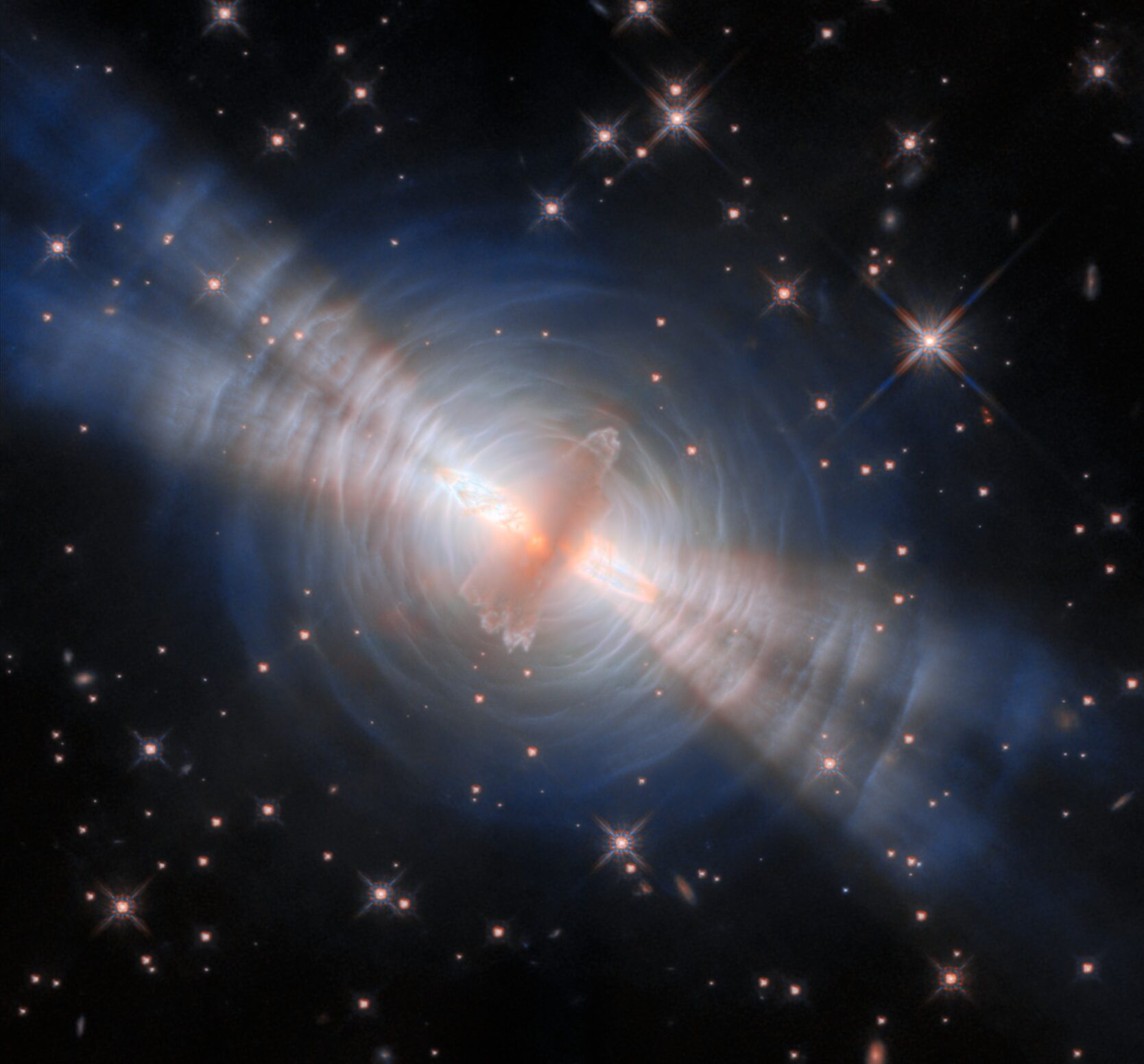
The Egg Nebula, captured in breathtaking clarity by the Hubble Space Telescope, presents a poignant tableau: a dying Sun-like star shedding its outermost layers, painting the cosmos with an ethereal, shimmering spectacle. This isn’t just a beautiful image; it’s a front-row seat to the grand finale of a stellar life cycle, a cosmic ballet of gas and dust coalescing into the building blocks of future worlds.
—
## From the Shuttle Bay to the Backyard: A Different Kind of Mission Control
Looking at that image of the Egg Nebula, I can’t help but feel a pang of something akin to professional nostalgia. It’s a stunning shot, no doubt, and a testament to what Hubble can do. But for me, the raw materials of such celestial beauty – the gas, the dust, the very essence of stellar creation and destruction – hold a different kind of significance now.
You see, my days of meticulously inspecting materials for aerospace applications, ensuring every component could withstand the brutal realities of launch and orbit, are on pause. The hum of machinery in the cleanroom has been replaced by the delightful cacophony of four small humans exploring their own universe right here on Earth. My mission control now involves snack schedules, story time negotiations, and the occasional crisis averted by a well-timed Band-Aid.
Yet, that past experience, those years spent immersed in the intricate world of materials science and processing, and the unwavering focus on safety that permeated every decision, still subtly shapes how I view these incredible glimpses of space. When I see images like the Egg Nebula, I don’t just see pretty colors. I see the fundamental elements that, under immense stellar pressure and time, will one day form the very materials that might, in some distant future, be used to explore wonders like this.
My work on the Space Shuttle involved understanding how materials behave under extreme conditions – the vacuum of space, the fiery re-entry, the relentless radiation. We were concerned with resilience, with integrity, with ensuring that every weld, every composite layer, every thermal protection tile would perform flawlessly. This deep dive into the “how” and “why” of material behavior, the constant pursuit of understanding limitations and pushing boundaries, gives me a unique perspective when observing cosmic phenomena.
Even though I’m not physically working with those advanced composites or analyzing propellant reactions anymore, that ingrained analytical mindset is always at play. It’s a different kind of vigilance, a continuous, albeit less urgent, assessment of the processes at work. It’s the quiet hum of a mind that’s been trained to look beyond the surface, to consider the underlying physics and chemistry that govern everything from a spacecraft’s heat shield to the spectacular expulsion of gas from a dying star.
So, while I might be coordinating a playdate instead of a launch sequence, that meticulous attention to detail, that appreciation for the fundamental building blocks of existence, and that inherent understanding of extreme environments remain. It’s a different kind of mission, but the principles of careful observation and a deep respect for the forces at play? Those are lessons learned in the halls of NASA that I carry with me, even as I navigate the beautiful chaos of raising a family. And honestly, the sheer wonder of seeing these celestial events unfold, knowing the incredible science behind them, is a pretty amazing reward in itself.
Leave a Reply