Here’s a blog post reflecting your experience, focusing on the provided NASA image and article:
## Stellar Breath and the Echoes of Engineering
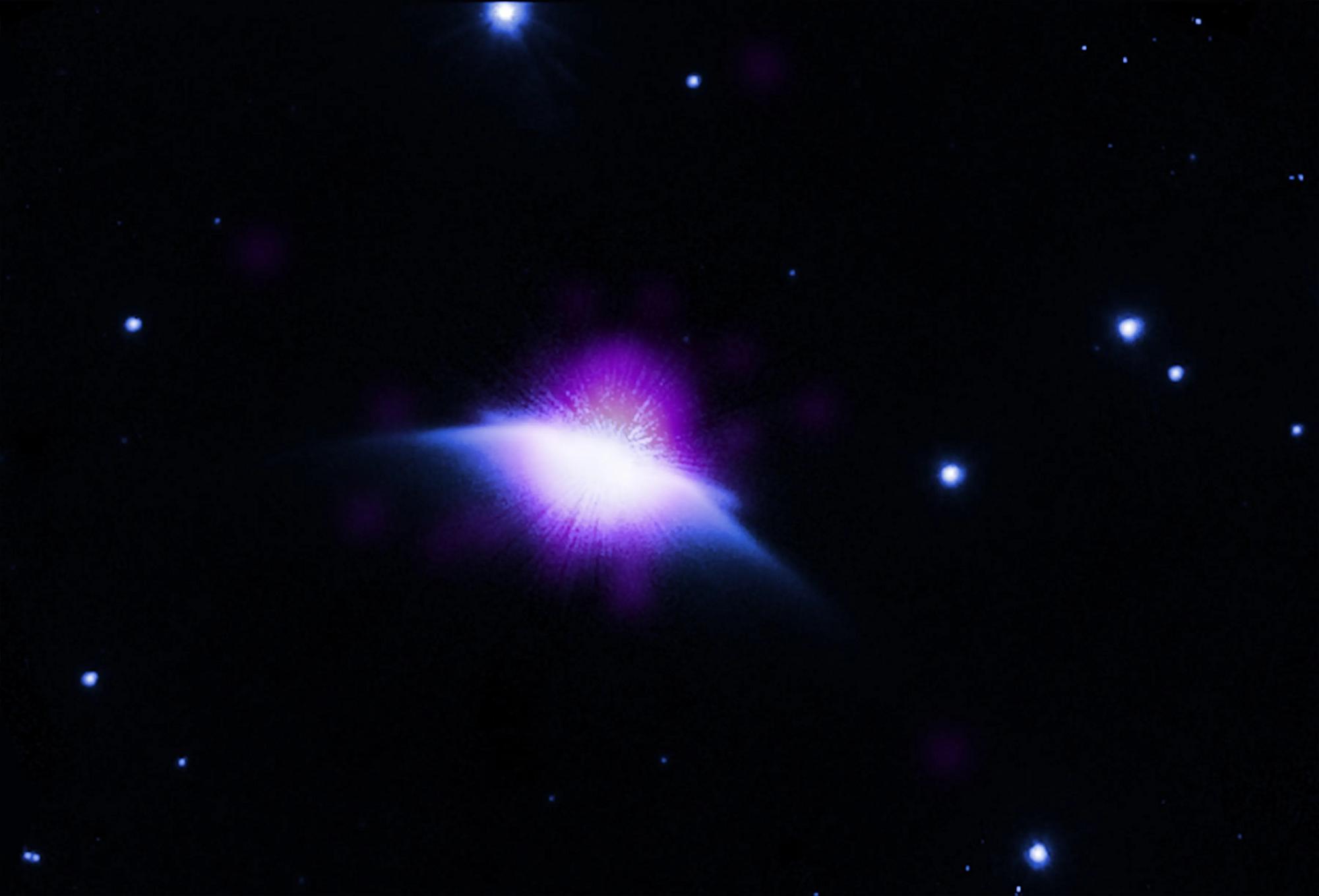
Imagine, if you will, the universe as a cosmic artist, constantly at work. And sometimes, its brushstrokes are grand, sweeping gestures that leave behind wonders like the “stellar bubbles” captured by NASA’s Chandra X-ray Observatory. This latest image, revealing a younger star actively “blowing bubbles,” is more than just a pretty picture; it’s a peek into the dynamic life cycle of stars and a reminder of the incredible forces at play in our galaxy.
Seeing this image, I’m immediately transported back to the intricate dance of forces and materials I used to wrestle with. It’s not just about launching rockets; it’s about understanding the environment those rockets, and the celestial bodies they investigate, exist within. The article mentions a “younger version of the Sun.” This concept of stellar evolution, of a star beginning its life and actively shaping its surroundings, resonates deeply.
When you’re deep in the weeds of materials science, designing components that need to withstand extreme temperatures, pressures, and radiation, you start to develop an almost intuitive feel for how materials behave under stress. You learn to anticipate how different elements will react, how they’ll expand, contract, erode, or endure. Looking at these massive X-ray emissions, these outward expulsions of stellar material, I can’t help but think about the sheer scale of energy involved. It’s a reminder of why understanding material properties isn’t just an academic exercise – it’s fundamental to comprehending the universe itself.
This stellar “blowing bubbles” is a direct consequence of a star’s internal processes, its fusion engine expelling matter and energy outwards. It’s a process that, on a vastly different scale, we had to account for in every design choice for the Space Shuttle. Think about the thermal protection system, for instance. We spent countless hours ensuring those tiles could handle the fiery re-entry, the immense heat generated by friction with the atmosphere. Understanding how materials react to energy transfer, how they can be shielded or engineered to absorb and dissipate it, is key.
While my days now are filled with the delightful chaos of raising four children, my mind still often drifts to the grander narratives unfolding in space. The analytical mindset, the deep dive into cause and effect, the meticulous attention to detail – these are skills that don’t just disappear. They simply get applied to new, albeit earthbound, challenges. But when I see images like this, I’m reminded of the immense privilege of having been a part of the engineering effort to explore these very phenomena. It’s a connection, however indirect, to the cosmic ballet that continues to unfold, and it’s pretty spectacular to witness.
Leave a Reply