## A Celestial Brain and a Mother’s Gaze
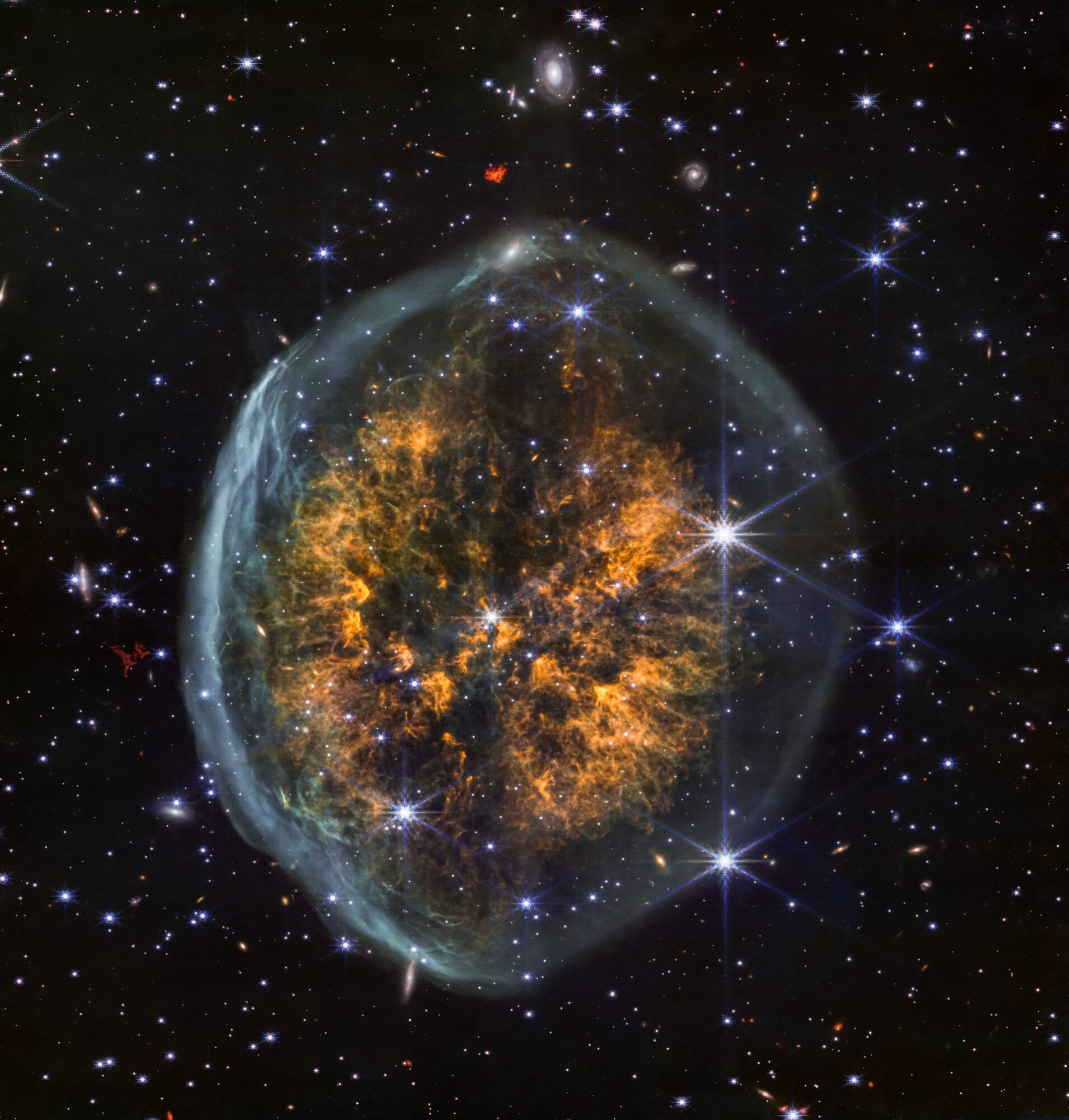
The cosmos, in its infinite wisdom, often presents us with spectacles that mirror the familiar. In a recent revelation from the James Webb Space Telescope, a celestial formation has emerged that strikingly resembles a human brain, complete with what appear to be left and right hemispheres. This breathtaking image, far from being a cosmic oddity, offers a profound glimpse into the life cycle of a star. What we perceive as neural structures is, in reality, the dying exhalations of a star shedding its gaseous outer layers. Within this cosmic nebula, a complex interplay of elements creates a vibrant tapestry, a testament to the universe’s ongoing processes of creation and dissolution. The precision required to capture such intricate detail, and to understand the physics at play, is something truly remarkable.
—
## From Shuttle Rivets to Stellar Nebulas: A Mother’s Perspective on Webb’s “Brain”
It’s a strange thing, isn’t it? To spend years meticulously ensuring every bolt, every weld, every material choice on something as complex as the Space Shuttle was exactly right – a symphony of engineered precision designed to defy gravity and the vacuum of space. Then, to transition to the quiet hum of home, surrounded by the delightful chaos of four children, and find yourself gazing at an image that looks uncannily like a brain, painted across the vast canvas of space.
This new picture from the James Webb Space Telescope, the one they’re calling the “Cranium Nebula” (and who can blame them?), is more than just a pretty picture to me. It’s a profound echo of the work I used to do, viewed through a decidedly different, yet equally focused, lens.
When I look at that stellar cloud, I don’t just see a dying star blowing off gas, though that’s precisely what it is. I see the intricate dance of forces, the delicate balance of energy and matter. I see the incredibly complex processing required to not only capture such an image but to interpret it. It reminds me of the teams I worked with, the dedication it took to design, build, and operate systems that pushed the boundaries of what was possible. We were, in our own way, dissecting the universe, layer by layer, to understand how it all fit together.
There were moments, back on the Shuttle program, when we’d be staring at telemetry, tracing the flow of heat through a composite material or analyzing the stress on a particular joint. It was about understanding how materials behaved under extreme conditions, how energy transferred, how everything interacted. This image, this nebula, is a grander, more magnificent manifestation of those same principles. A star, much like a shuttle engine, is a complex system. Its “exhaust” isn’t just smoke; it’s a history book of its life, written in the language of spectral lines and glowing gas.
Now, my “engineering” involves ensuring scraped knees are bandaged, that homework is tackled (even the fractions!), and that bedtime stories are told with dramatic flair. The stakes are different, the scale is intimate, but the underlying drive to observe, to understand, and to ensure the well-being of something precious remains.
What Webb has achieved here, capturing this ethereal “brain,” is a testament to human ingenuity. It’s a reminder that even as our individual paths change, the collective human spirit of exploration and discovery continues to soar. And for this former shuttle engineer, now grounded by the beautiful gravity of motherhood, it’s a breathtakingly familiar, yet utterly new, horizon to contemplate. It shows that whether you’re checking the integrity of a heat shield or studying the birth and death of stars, the fundamental principles of science and the awe-inspiring nature of the universe remain constant. And sometimes, the universe just likes to give us a little wink, a celestial reminder of the complex, beautiful systems we are all a part of.
Leave a Reply