### The Cosmic Dance of a Dying Star: Webb Reveals the Helix Nebula’s Fiery Secrets
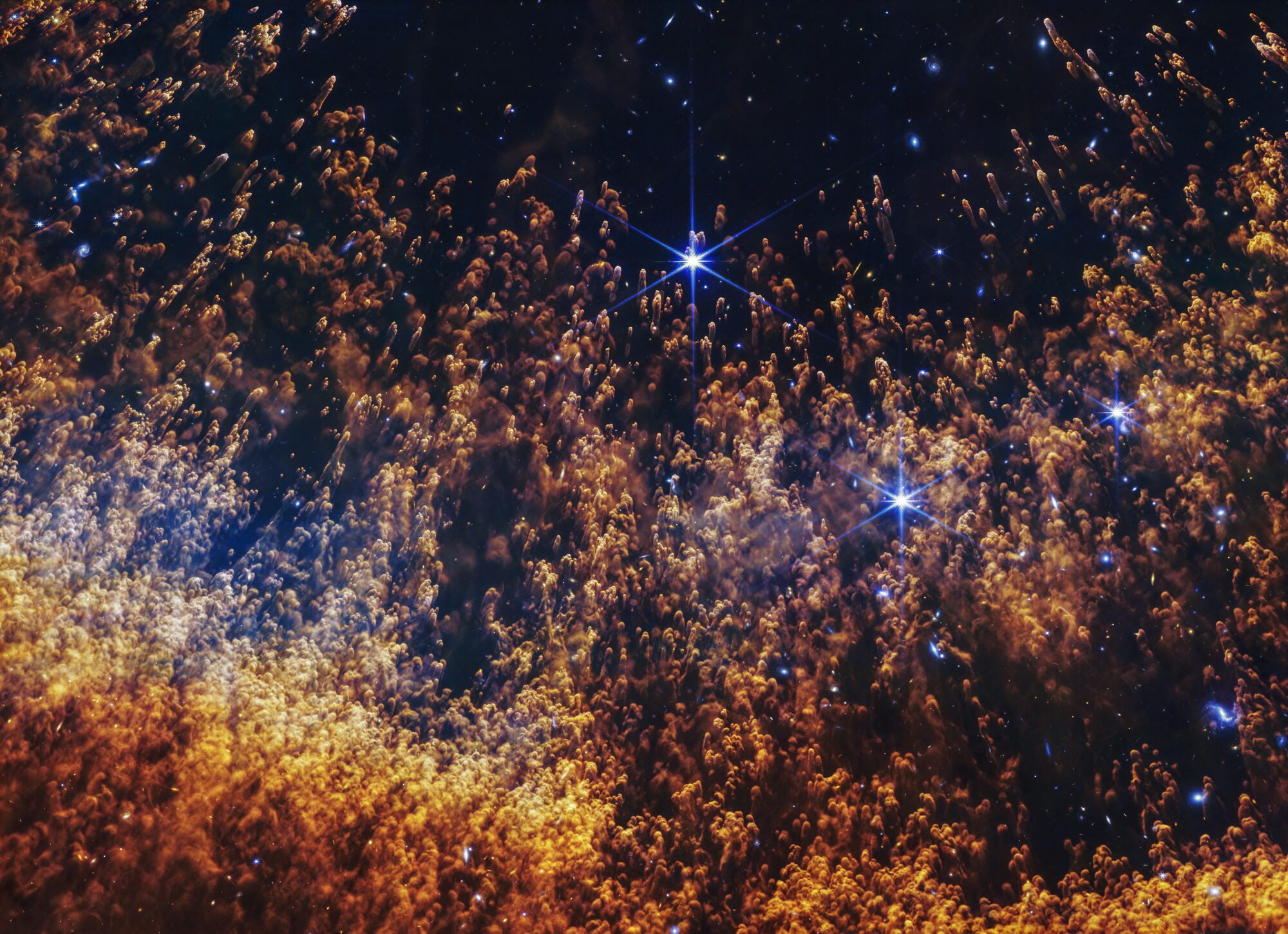
Imagine a celestial ballet, a slow, majestic waltz of gas and dust playing out across unfathomable distances. That’s precisely what the latest breathtaking image from the James Webb Space Telescope (JWST) offers us, a glimpse into the tumultuous final act of a star’s life: the Helix Nebula. This isn’t just another pretty space picture; it’s a masterclass in the violent, yet beautiful, processes that shape the universe.
Webb’s keen eye has captured an intimate portrait of this cosmic spectacle, revealing intricate details that were previously obscured. We’re seeing “comet-like knots,” dense clumps of material being sculpted by the relentless onslaught of stellar winds. These winds, born from the dying star at the nebula’s heart, are like celestial sculptors, carving out and shaping the gas and dust shed by the star as it enters its twilight years.
What’s particularly fascinating is the stark visual transition Webb highlights. It’s like observing a slow-motion explosion, where the intense heat of the central white dwarf clashes with the cooler, more distant gas. You can almost sense the boundary where the star’s fiery breath meets the vast emptiness of space, a dynamic interplay that showcases the incredible forces at play. This visual clue allows scientists to map the expansion and interaction of these shed layers with unprecedented clarity.
The Helix Nebula, often nicknamed the “Eye of God” for its striking resemblance to a human eye, is a planetary nebula. This isn’t related to planets in the way one might think, but rather refers to the shell of gas expelled by a star like our Sun when it reaches the end of its life. It’s a common, albeit spectacular, fate for stars of a certain mass, and Webb’s detailed observations are helping us understand this process more deeply than ever before.
This image from JWST isn’t just about capturing beauty; it’s about unlocking scientific mysteries. It’s a testament to human ingenuity and our insatiable curiosity to explore the cosmos.
—
### A Whisper from the Void: Reflections on Webb’s Helix Nebula Revelation
Watching the new Webb image of the Helix Nebula unfold is a deeply resonant experience. It brings to mind the countless hours spent poring over complex schematics, the metallic tang of the workshop, the hum of machinery, and the sheer, unyielding gravity of responsibility that hung in the air.
The intricate details captured by Webb – the “comet-like knots,” the fierce stellar winds, the stark transitions in gas temperature – these aren’t just abstract concepts to me. They are tangible forces, the very phenomena I spent years ensuring could withstand the brutal realities of space. When I look at the way those knots are being sculpted, I see the immense power of directed energy, a force that had to be understood and managed, whether it was the heat from reentry or the corrosive effects of the space environment on materials.
The transition between hot and cool gas, highlighted so clearly by Webb, reminds me of the critical importance of material science and thermal management. Understanding how different substances behave under extreme temperature gradients, how they absorb or dissipate energy, was paramount to the success and safety of every mission. The delicate balance required to keep sensitive components within their operational limits, to prevent catastrophic failure due to thermal stress – it’s all there, writ large in the Helix Nebula.
My time spent focusing on safety in the Space Shuttle program ingrained in me a profound appreciation for the elegance of natural processes, but also for the unforgiving nature of physics. You couldn’t bluff the vacuum of space, and you certainly couldn’t ignore the fundamental properties of the materials you were entrusting to it. This image, while breathtakingly beautiful, is also a stark reminder of those fundamental forces at play, forces that we strive to understand and harness, but which ultimately operate on a scale far grander than our own.
Now, surrounded by the beautiful chaos of my own little universe – four wonderful children – my perspective on these cosmic events is, perhaps, uniquely shaped. The raw, untamed power of stellar winds and the meticulous layering of gas echo the constant, dynamic interplay in a busy household. And just as Webb’s instruments provide a clearer, more profound view of the cosmos, the quiet moments between lullabies and scraped knees offer a different kind of clarity – a deep understanding of nurturing, growth, and the enduring, powerful forces that shape lives, both on Earth and among the stars. The universe, in its grandest and smallest expressions, is a testament to the enduring power of science and the profound beauty of the processes that govern it.
Leave a Reply